
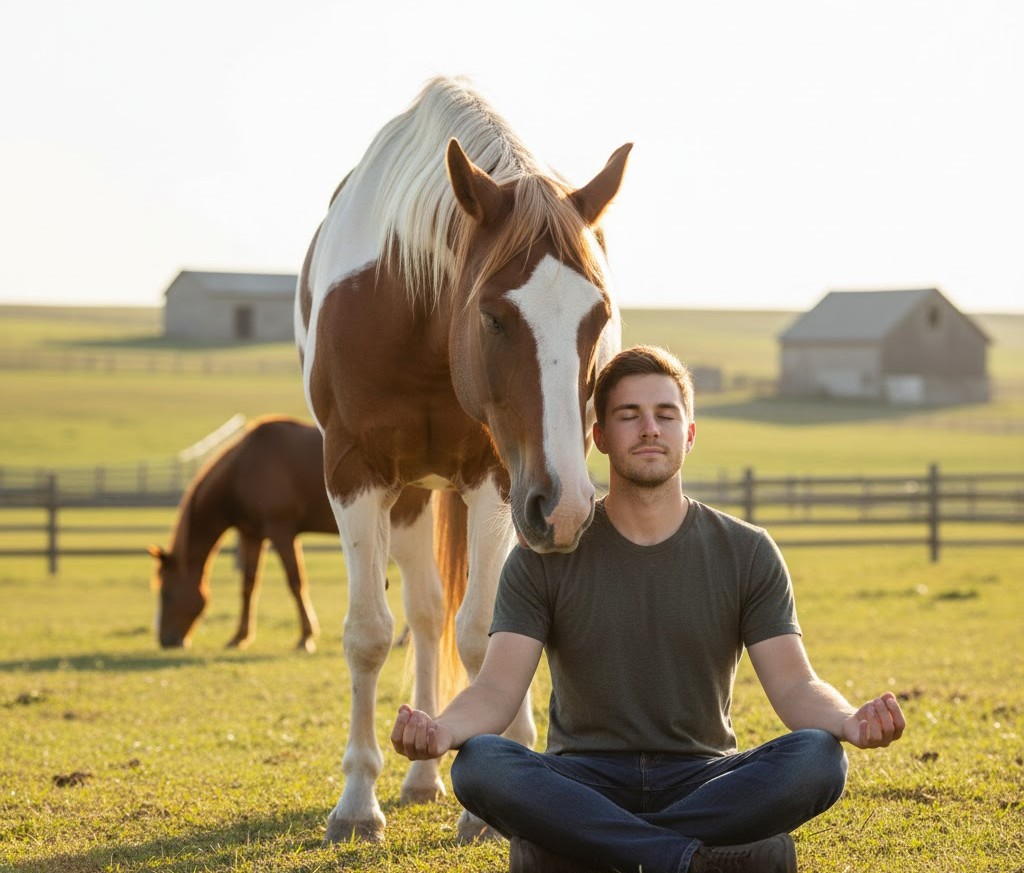
Horses are powerful, athletic, and capable of remarkable performance. But one of their greatest gifts to humans has nothing to do with speed, strength, or skill. It has to do with patience and presence.
Time spent with horses has a way of slowing people down. It pulls attention out of the past and future and anchors it firmly in the moment. For riders and handlers alike, horses demand a kind of awareness that modern life rarely encourages — calm, focused, and patient.
In learning to work with horses, people often discover that they are not just becoming better riders. They are becoming more grounded humans.
Horses Live Entirely in the Present
Unlike humans, horses do not dwell on yesterday’s mistakes or worry about tomorrow’s outcomes. They respond to what is happening now.
This present-moment awareness is not a choice for horses — it’s survival. As prey animals, they rely on constant sensory input to assess safety and make decisions.
When humans interact with horses while distracted, rushed, or mentally elsewhere, horses feel it immediately. Their attention shifts, their bodies tense, or their focus drifts.
To truly connect, humans must meet horses where they are: in the present moment.
Why Horses Expose Impatience So Quickly
Impatience often shows up as:
- Rushing through exercises
- Repeating cues without waiting for a response
- Escalating pressure too quickly
- Becoming frustrated when progress feels slow
Horses respond to impatience with confusion, resistance, or withdrawal. They don’t respond well to being hurried because learning, for them, requires clarity and emotional safety.
A horse that doesn’t respond instantly is rarely being stubborn. More often, it’s processing, unsure, or overwhelmed.
Waiting — truly waiting — is a skill horses insist humans learn.
The Cost of Rushing the Process
In horse training and riding, impatience has consequences.
Rushing leads to:
- Incomplete understanding
- Tension in the horse’s body
- Loss of trust
- Fragile performance
Horses trained under pressure may comply temporarily, but their confidence and willingness often erode over time.
Patience, on the other hand, builds depth. Skills developed patiently tend to last because they are understood, not forced.
Presence Is Felt Before It’s Seen
Horses don’t need humans to say they’re focused — they feel it.
Presence shows up as:
- Quiet, consistent body language
- Calm breathing
- Clear, intentional movement
- Emotional steadiness
When a person is truly present, the horse often mirrors that state. Movement becomes smoother, responses more reliable, and tension begins to dissolve.
This is why some people seem to calm horses simply by standing near them. Their presence is grounded.
Learning to Slow Down Internally
One of the hardest lessons horses teach is that slowing down externally isn’t enough. Riders and handlers must slow down internally as well.
This means:
- Letting go of mental noise
- Releasing the need for control
- Accepting progress as it comes
Horses respond far better to calm intention than to urgency.
In many cases, improvement begins the moment the human stops trying to force it.
Horses Reward Consistency, Not Hurry
Horses thrive on consistency. They learn through repetition, fairness, and predictability.
When humans show up consistently — emotionally and physically — horses respond with trust.
This kind of trust:
- Reduces anxiety
- Improves focus
- Strengthens communication
- Encourages willingness
Consistency requires patience. And patience, in turn, creates reliability.
How Horses Teach Us to Listen Without Interrupting
Humans are conditioned to fill silence, fix problems quickly, and push for outcomes. Horses challenge that instinct.
Working with horses teaches people to:
- Pause before reacting
- Observe instead of interrupt
- Allow space for response
These skills are rare — and valuable — in human relationships as well.
Listening without rushing changes the quality of connection, whether with horses or people.
The Emotional Regulation Horses Require
Horses don’t respond well to emotional volatility. Frustration, anger, or anxiety create instability that horses instinctively avoid.
To work effectively with horses, humans must learn to:
- Regulate emotions
- Recover quickly from mistakes
- Stay calm under pressure
This emotional discipline carries into daily life, helping people navigate stress with greater resilience.
Presence Improves Performance
Ironically, slowing down often leads to better results.
Riders who focus on being present tend to:
- Time aids more accurately
- Maintain better balance
- Communicate more clearly
- Make fewer reactive mistakes
Presence sharpens awareness. And awareness improves performance.
Lessons That Extend Beyond the Barn
The patience and presence learned through horses don’t stay in the arena.
Many riders find themselves:
- More patient with others
- Less reactive in stressful situations
- Better at focusing on one task at a time
- More comfortable with silence and stillness
Horses teach these lessons not through instruction, but through experience.
Why These Lessons Matter Now More Than Ever
In a world built on speed, urgency, and constant distraction, patience and presence are becoming rare skills.
Horses offer a counterbalance.
They remind humans that:
- Progress takes time
- Connection requires attention
- Calm is powerful
- Being present is enough
These lessons are subtle, but deeply transformative.
Final Thoughts
Horses don’t demand perfection. They demand honesty, clarity, and presence.
They teach patience not by asking for it, but by making it necessary. They teach presence by refusing to engage with anything less.
For those willing to listen, horses offer a quiet but profound education — one that extends far beyond riding.
In learning to meet horses in the present moment, many people discover something unexpected:
They finally meet themselves there too.