
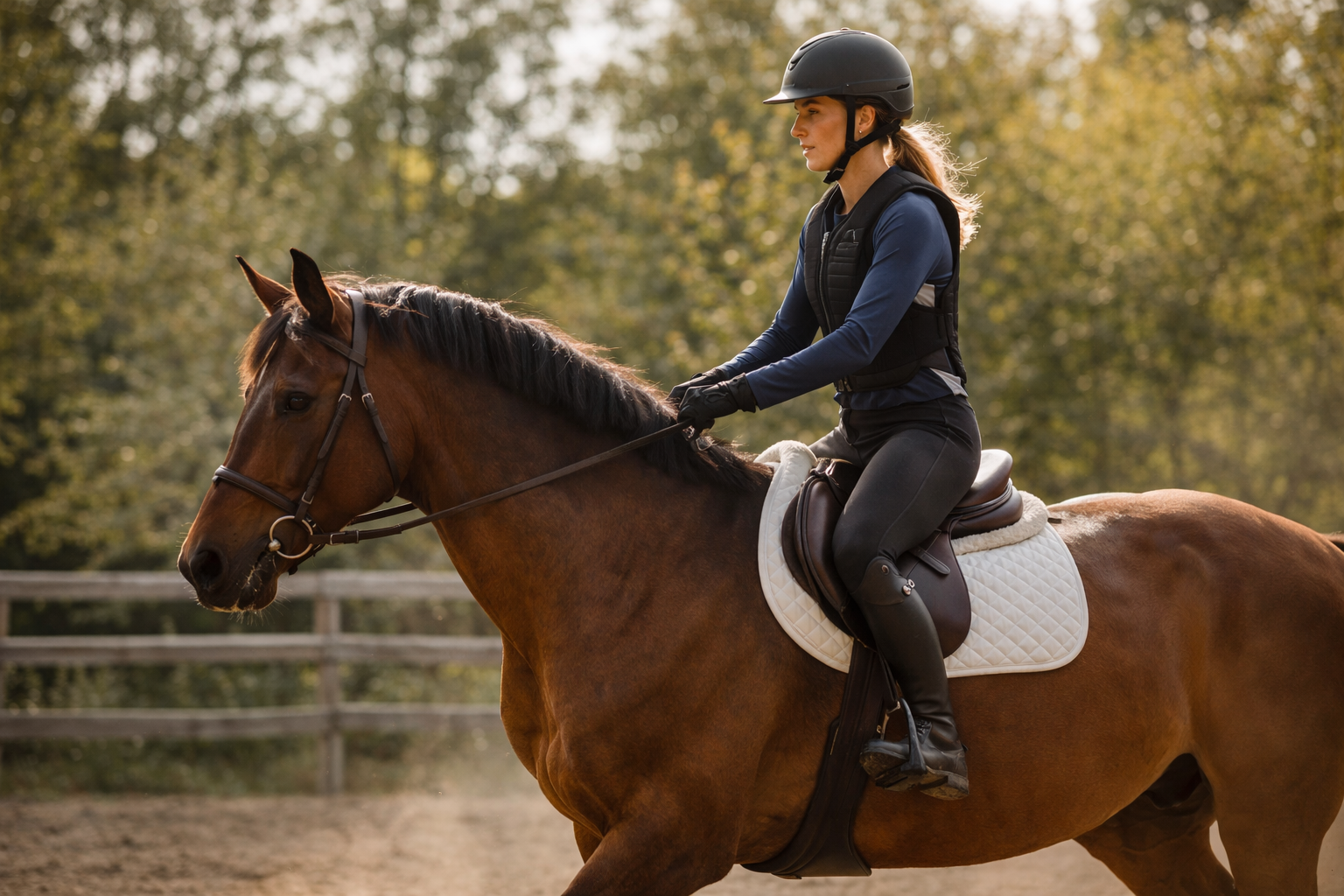
Riding apparel can feel like a purely aesthetic topic—until you spend three hours in cold rain, ride through a humid summer lesson, or realize your boot sole is too slick on the stirrup. What you wear affects balance, confidence, and even the way your horse responds to your aids. The best riding apparel isn’t about looking the part; it’s about supporting comfort, safety, and consistency.
Why Comfort Is Not a Luxury in Riding
Comfort influences movement. A rider who is cold, overheated, restricted, or chafed will unconsciously compensate. Compensation often looks like stiffness: locked hips, tight shoulders, gripping with the leg, or unstable hands. Horses feel that stiffness immediately. Comfort allows the rider to stay elastic and quiet, which improves communication.
Comfort also supports mental focus. If you’re distracted by slipping breeches, pinching seams, or numb fingers, your timing and awareness suffer. Safe riding begins with the ability to stay present and balanced.
The Helmet: Non-Negotiable, but Not One-Size-Fits-All
A helmet is the single most important piece of protective equipment. But many riders wear helmets that don’t fit well, which reduces both comfort and safety.
A proper helmet fit should:
– Sit level, not tipped back
– Feel snug without pressure points
– Stay stable when you move your head
– Allow ventilation appropriate to your climate
If a helmet is uncomfortable, riders may adjust it incorrectly or avoid wearing it consistently. Comfort supports compliance, and compliance saves lives.
Footwear: Where Safety and Function Meet
Riding boots do more than complete a look. They stabilize the lower leg, protect the foot, and support safe stirrup use.
Key footwear considerations include:
– **Heel:** prevents the foot from sliding through the stirrup
– **Sole grip:** enough traction without being sticky
– **Ankle support:** especially important for beginners or those riding unpredictable horses
– **Comfort for walking:** barns require walking, lifting, and uneven terrain
Tall boots offer leg stability and protection, while paddock boots with half chaps offer flexibility and can be more comfortable for daily riding. The “best” choice depends on your discipline, budget, and barn demands.
Breeches and Tights: Grip, Mobility, and Skin-Friendly Design
A good pair of breeches should allow full hip motion without pulling. Riders often underestimate how much fabric matters during posting trot, two-point, and sitting work.
Look for:
– Stretch that returns to shape (not baggy after one ride)
– Seam placement that avoids friction
– Breathable panels for heat management
– Grip that supports stability without locking the seat
Full-seat grip can help riders feel secure, but too much grip can restrict subtle seat aids. Knee-grip options often suit jumping or forward-seat disciplines. The right choice is the one that supports your position without creating dependency.
Layers: The Secret to All-Weather Riding Comfort
Temperature management is a performance tool. Riders who are cold become rigid; riders who are overheated become fatigued and less coordinated.
A smart layering system includes:
– **Base layer:** moisture-wicking and close-fitting
– **Mid layer:** insulation that traps warmth without bulk
– **Outer layer:** windproof and water-resistant, with riding-friendly cut
The most rider-friendly jackets have:
– Two-way zippers
– Longer back hems for coverage in the saddle
– Stretch panels for shoulder mobility
– Minimal bulk around the elbows and waist
Gloves: Not Just for Style
Gloves protect the hands, improve rein feel, and reduce friction. In cold weather, they help maintain dexterity. In hot weather, they prevent sweat from making reins slippery.
Choose gloves that:
– Fit snugly without restricting finger movement
– Provide grip without excessive padding
– Match weather needs (insulated vs. breathable)
– Allow touchscreen use if needed for barn practicality
Better hand comfort often results in quieter contact, which horses appreciate.
Safety Vests and Air Vests: When Comfort Encourages Use
Protective vests can be valuable for jumping, young horses, trail riding, and riders rebuilding confidence after falls. The challenge is that bulky or restrictive vests often end up in the tack room instead of on the rider.
Modern designs focus on:
– Flexible materials
– Better ventilation
– Riding-specific shaping
– Lightweight construction
If a vest is comfortable, it becomes part of your routine rather than something you wear only “when you should.”
Choosing Apparel That Works for Your Barn Life
Barn life is unpredictable: mud, hay dust, water buckets, sudden temperature shifts. Apparel that looks great but can’t handle real conditions becomes expensive and frustrating.
Practical questions to ask:
– Can I wash it easily?
– Does it dry quickly?
– Will it survive daily use?
– Does it allow me to move freely on and off the horse?
A Rider’s Comfort Routine for Consistent Safety
To keep comfort from becoming an afterthought, build a simple routine before you ride: check helmet fit, confirm boot soles are clean for stirrup grip, choose gloves based on the reins and weather, and layer so you can remove warmth after warm-up. This takes two minutes and prevents the small discomforts that lead to big mistakes.
The Hidden Benefit: Comfort Creates Consistency
Riding is a sport of small signals. Your horse reads tiny changes in balance and muscle tone. Apparel that supports comfort helps you ride the same way every day—steady leg, quiet hand, relaxed seat. That consistency builds trust in your horse and confidence in you.
The best riding apparel is the kind you forget you’re wearing. When your gear disappears into the background, your attention stays where it belongs: on your horse, your position, and the partnership you’re building.
Small Details That Prevent Big Distractions
Pay attention to the little things: socks that don’t bunch, hair tied so it doesn’t whip your face, and layers that don’t ride up when you sit. These details sound minor, but they protect your concentration—especially when you’re riding a young horse, jumping, or riding outside the arena where surprises happen.