
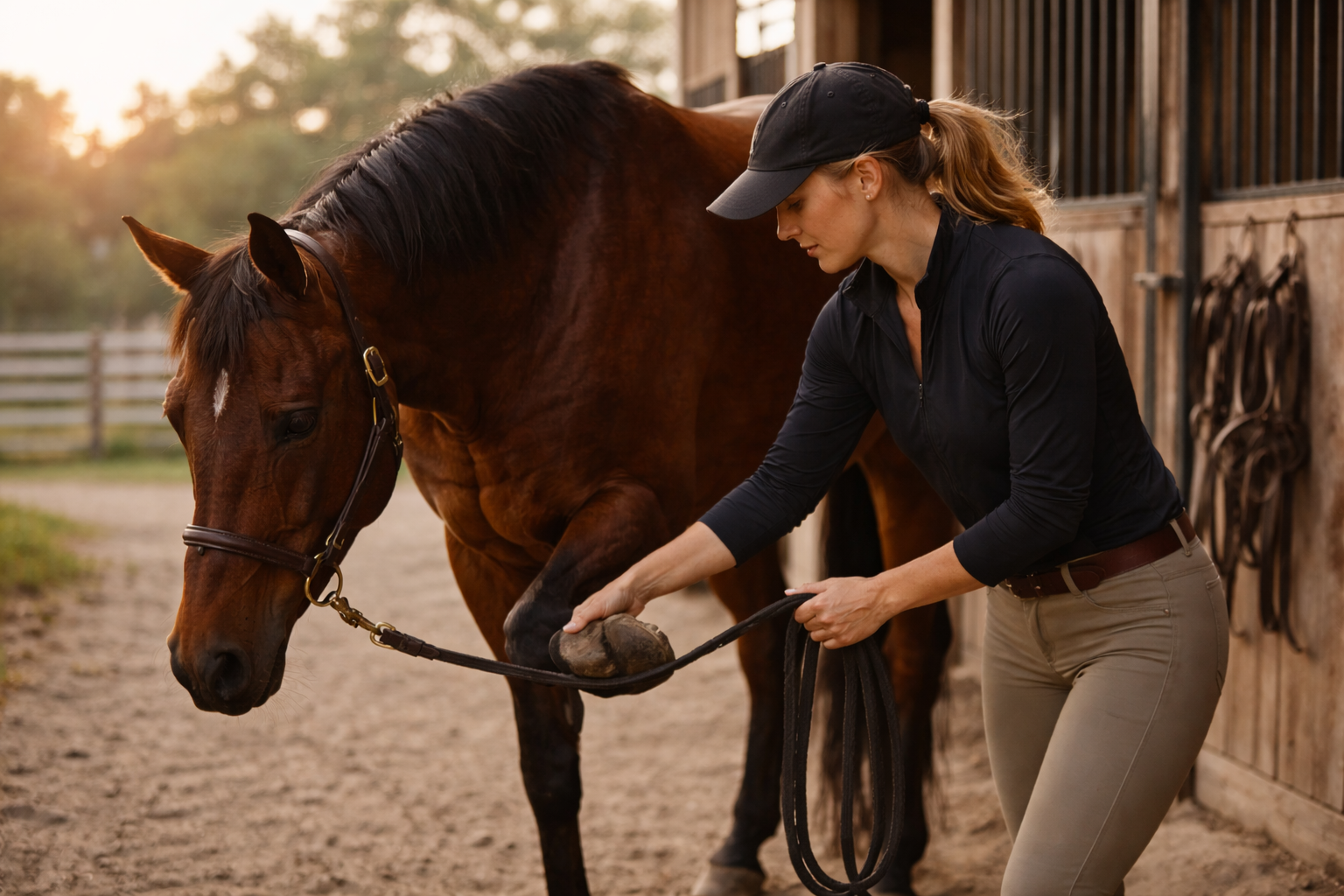
Discipline and patience are often spoken about as personality traits—things people either have or lack. The equestrian lifestyle challenges that idea. Working with horses does not reward impulsivity, shortcuts, or emotional urgency. Instead, it quietly shapes behavior over time, building discipline and patience through structure, repetition, and responsibility rather than motivation or inspiration.
Unlike many activities that offer quick feedback or instant gratification, horses require consistency across days, weeks, and years. Progress happens slowly, and it only appears when effort is sustained without force. This environment naturally trains discipline and patience in ways few other pursuits can.
Discipline as a Daily Practice, Not a Moment of Willpower
In the equestrian world, discipline is not about pushing harder on difficult days. It is about showing up consistently, even when conditions are inconvenient or progress feels invisible.
Horses need care every day. Feeding schedules, turnout routines, grooming, hoof care, and basic health checks do not pause for bad weather, busy weeks, or low motivation. This creates a form of discipline rooted in responsibility rather than ambition.
Over time, riders stop relying on motivation and start relying on routine. Tasks are done because they are part of the horse’s well-being, not because they feel rewarding in the moment. This shift from emotional motivation to habitual action is one of the strongest foundations of discipline.
Learning to Work Within Time, Not Against It
Horses operate on biological timelines that cannot be rushed. Muscles need time to develop. Tendons adapt slowly. Trust forms through repetition, not explanation.
The equestrian lifestyle forces people to confront this reality. No amount of desire or effort can accelerate a horse’s physical or mental readiness without consequences. Riders learn that pushing ahead of the horse’s capacity leads to resistance, injury, or regression.
This teaches patience in its most practical form: respecting time as a necessary component of growth. In everyday life, this lesson often translates into a healthier relationship with long-term goals, where steady progress replaces urgency.
Consistency Over Intensity
One of the clearest lessons horses teach is that consistency matters more than intensity. A calm, focused rider who trains moderately but regularly will see more sustainable progress than one who trains sporadically with high intensity.
This principle shapes discipline by encouraging regular, manageable effort rather than bursts of enthusiasm followed by burnout. Riders learn to value small, repeatable actions—correct warm-ups, clear transitions, thoughtful cool-downs—over dramatic sessions.
In daily life, this mindset supports habits that last. Discipline becomes something maintained quietly, not something performed dramatically.
Patience Through Repetition
Repetition is unavoidable with horses. Basic skills—standing quietly, leading politely, balanced transitions—must be practiced countless times. There are no shortcuts.
At first, repetition can feel frustrating. Riders may feel they are “stuck” working on fundamentals while others appear to advance faster. Over time, repetition reveals its value. Each correct repetition builds understanding and confidence, even if the improvement is subtle.
This reshapes how patience is experienced. Patience becomes less about waiting and more about staying engaged in the process without emotional escalation.
Emotional Regulation as a Form of Discipline
Horses respond to emotional consistency. Sudden frustration, anxiety, or impatience disrupts communication and reduces safety. Riders quickly learn that emotional discipline is as important as physical skill.
Managing reactions becomes necessary, not optional. Raising one’s voice, forcing a movement, or riding through irritation rarely produces positive results. Calm repetition works better.
This teaches discipline at the emotional level. Riders develop the ability to notice rising emotions and regulate them before acting. Outside the barn, this skill appears as steadier responses to stress, conflict, and pressure.
Accepting Slow Progress Without Losing Commitment
One of the hardest aspects of the equestrian lifestyle is accepting that progress may be invisible for long periods. Muscle development, balance, and trust do not announce themselves loudly.
Riders learn to commit without immediate reward. They continue showing up, maintaining routines, and refining basics even when there is no external validation.
This builds a deep form of patience: the ability to stay engaged without constant reinforcement. In everyday life, this supports persistence in careers, education, and personal growth—areas where results often lag behind effort.
Learning to Separate Effort from Outcome
With horses, effort does not always produce the expected outcome. A well-planned session may fall apart due to weather, the horse’s mood, or physical fatigue. A simple session may suddenly feel excellent.
This unpredictability teaches a crucial lesson: discipline is about effort and preparation, not guaranteed success. Riders learn to evaluate their actions independently of results.
This reduces frustration and increases resilience. Effort becomes valuable in itself, rather than only when it leads to visible success.
Patience in Building Trust
Trust cannot be rushed. Horses learn to trust through repeated experiences that confirm safety and fairness. One negative interaction can undo weeks of progress.
This reality forces riders to slow down emotionally. Pushing for compliance often delays trust. Calm consistency builds it.
The patience developed here extends into human relationships. Riders often become more tolerant of others’ learning curves, more respectful of boundaries, and less reactive to setbacks.
Discipline Through Structure and Routine
The equestrian lifestyle is inherently structured. Feeding times, training schedules, turnout routines, and maintenance tasks create a rhythm that shapes daily life.
This structure supports discipline by reducing decision fatigue. Tasks are done because they are scheduled, not because they require constant choice. Over time, discipline becomes automatic rather than effortful.
Many riders notice that this structure spills into other areas of life. Time management improves. Commitments are honored more reliably. Chaos feels less tolerable.
Learning When Not to Push
True discipline includes restraint. Horses teach riders when not to push—when a session should end early, when recovery is needed, when expectations must be adjusted.
This kind of patience is often missing in performance-driven environments. Learning to stop before damage occurs is a sophisticated skill.
In everyday life, this translates into healthier work habits, better self-care, and reduced burnout. Discipline becomes balanced rather than rigid.
Growth Through Responsibility, Not Pressure
Horses do not respond well to pressure without understanding. They respond to responsibility carried calmly and consistently.
The equestrian lifestyle builds discipline not by demanding perfection, but by requiring responsibility over time. Patience develops because rushing simply does not work.
The Quiet Transformation
Many riders do not notice these changes as they happen. Discipline and patience develop gradually, embedded in daily routines and repeated interactions.
Eventually, riders realize they handle frustration differently, tolerate delays more easily, and commit to long-term goals with greater steadiness.
Discipline and Patience as Byproducts of Horsemanship
The equestrian lifestyle does not set out to teach discipline and patience. It simply requires them. Those who stay involved adapt.
Through care routines, training setbacks, slow progress, and responsibility without applause, riders develop these qualities organically.
In the end, discipline and patience are not learned through force or motivation. They are built quietly, day by day, in the presence of an animal that responds only to what is consistent, fair, and real.