
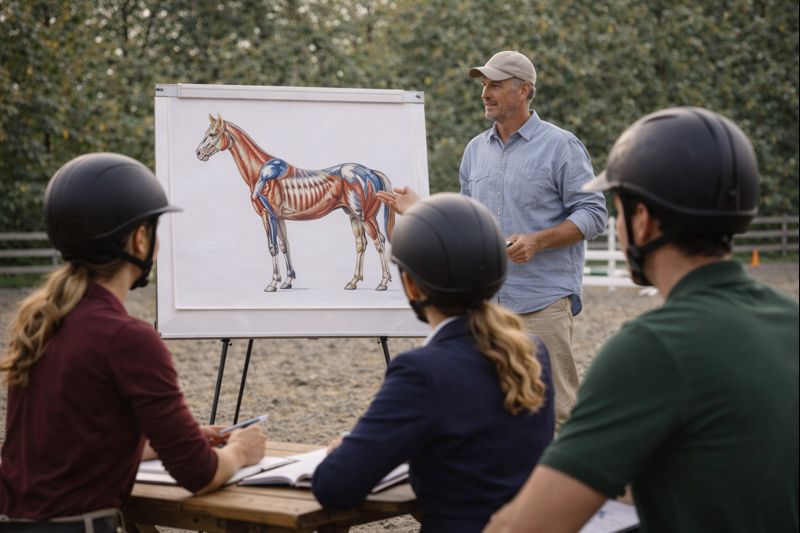
Horsemanship is often misunderstood as a collection of skills learned early and refined over time. In reality, it is an evolving practice shaped by experience, observation, and ongoing education. The most effective horsemen are not those who reached a certain level and stopped learning, but those who remained curious, adaptable, and willing to question their own habits.
Continuous education is not about accumulating credentials or chasing trends. It is about developing judgment—the ability to make thoughtful decisions in complex, changing situations involving a living animal. That judgment is built over time, through exposure to new ideas and reflection on lived experience.
Horsemanship Is Never Static
Horses change. Riders change. Knowledge changes. What was considered best practice decades ago has often been refined or replaced by deeper understanding of biomechanics, learning theory, and welfare.
Horsemen who rely solely on what they learned early in their careers risk becoming outdated. Continuous education allows practices to evolve alongside improved understanding.
This does not mean rejecting tradition. It means evaluating it thoughtfully in light of new evidence and experience.
Learning Beyond Technique
Technical skills matter, but they are only part of horsemanship. Continuous education expands understanding in areas that influence every ride.
These areas include:
- Equine behavior and learning processes
- Biomechanics and movement
- Saddle fit and equipment impact
- Conditioning, recovery, and soundness
- Nutrition and daily management
- Rider biomechanics and balance
- Emotional regulation and decision-making
As knowledge deepens, horsemen begin to see how interconnected these elements are.
Why Experience Alone Is Not Enough
Experience is valuable, but it can reinforce habits as easily as it builds skill. Without reflection, experience may simply repeat the same patterns.
Continuous education introduces new perspectives that challenge assumptions. It helps experienced riders distinguish between what works and why it works.
Horsemen who combine experience with education tend to make fewer reactive decisions and more informed adjustments.
Adapting to the Individual Horse
No two horses respond identically. Education equips horsemen to recognize individual differences rather than applying one-size-fits-all solutions.
Understanding temperament, physical structure, and learning style allows for more tailored approaches. This adaptability improves welfare and performance simultaneously.
Education teaches horsemen to ask better questions instead of forcing standard answers.
The Role of Critical Thinking
Continuous education encourages critical thinking rather than blind adoption of methods. Horsemen learn to evaluate information, not just accept it.
This includes:
- Assessing sources and context
- Understanding limitations of techniques
- Recognizing when advice does not fit a specific situation
- Avoiding trends that prioritize appearance over function
Critical thinking protects horses from experimentation driven by fashion rather than understanding.
Learning to See the Whole Horse
Ongoing education shifts focus from isolated issues to the whole picture. A behavior problem may reflect discomfort. A training plateau may reflect fatigue. A soundness issue may relate to management rather than workload.
Seeing the whole horse allows horsemen to intervene earlier and more effectively.
This holistic perspective reduces the likelihood of treating symptoms while ignoring causes.
Education Improves Decision-Making Under Pressure
Horsemen regularly make decisions under pressure: at events, during training setbacks, or when welfare concerns arise.
Education expands the range of available responses. Instead of reacting emotionally or relying on habit, informed horsemen can choose thoughtfully.
Better decisions protect both horse and rider, especially in unpredictable situations.
Learning From Multiple Disciplines
Continuous education often involves exposure to multiple disciplines. Even if a rider specializes, learning from other fields broadens understanding.
Dressage riders may learn balance from eventing. Jumpers may learn precision from dressage. Western riders may gain insights from biomechanics research.
Cross-disciplinary learning prevents tunnel vision and encourages adaptability.
Education as a Welfare Safeguard
Many welfare issues arise not from malice, but from outdated knowledge or misunderstood practices. Continuous education acts as a safeguard.
Horsemen who stay informed are more likely to:
- Recognize early signs of discomfort
- Adjust workload appropriately
- Choose equipment thoughtfully
- Advocate for the horse when necessary
Education strengthens ethical responsibility.
The Difference Between Information and Understanding
Access to information has never been easier. Understanding, however, requires integration.
Continuous education involves revisiting concepts as experience grows. What did not make sense early in a career often becomes clear later.
This layered understanding deepens judgment rather than overwhelming it.
Teaching as a Form of Learning
Horsemen who teach often deepen their own understanding. Explaining concepts forces clarity. Answering questions reveals gaps.
Continuous education benefits both teachers and students, creating a cycle of shared learning.
Avoiding the Illusion of “Knowing Enough”
One of the most dangerous points in horsemanship is believing one knows enough. This mindset closes the door to growth.
Horsemen who remain learners tend to:
- Stay open to feedback
- Adjust practices proactively
- Recognize early warning signs
- Maintain humility
Humility is not insecurity—it is awareness of complexity.
Education and Longevity in the Horse World
Riders who continue learning often remain active longer. They adapt goals as circumstances change, reducing burnout and injury.
Education supports sustainable involvement, allowing horsemen to ride with greater empathy and awareness over time.
Learning Through Reflection, Not Accumulation
Continuous education is not about attending every clinic or reading every article. It is about reflecting on what is learned and applying it thoughtfully.
Quality of learning matters more than quantity.
The Quiet Confidence of Educated Horsemen
Educated horsemen often appear calm rather than flashy. Their confidence comes from understanding rather than control.
They rely less on force and more on clarity. Their decisions are measured, not reactive.
This quiet confidence is built through years of learning and reflection.
Shaping the Next Generation
Horsemen committed to education influence others. They model curiosity, responsibility, and respect for the horse.
This influence shapes barn culture and supports the next generation of riders.
Horsemanship as an Ongoing Practice
Horsemanship is not a destination. It is a practice shaped by continual learning.
Each horse offers new lessons. Each challenge invites deeper understanding.
Why Continuous Education Matters
Continuous education shapes better horsemen because it keeps judgment flexible, ethics current, and understanding deep.
In a world where horses depend entirely on human decisions, the responsibility to keep learning never ends.
The best horsemen are not those who know the most—but those who never stop learning.