
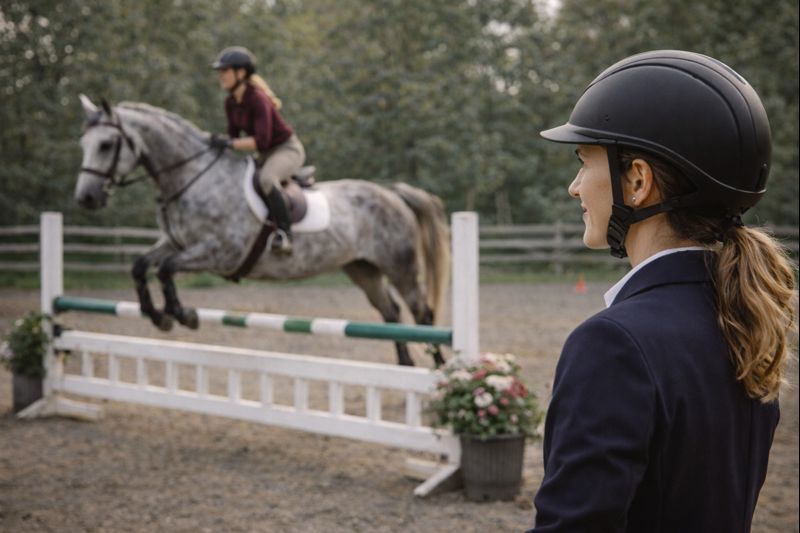
Spending time around other riders is unavoidable in the equestrian world. Whether at the barn, in lessons, at clinics, or during events, riders constantly observe one another. This environment creates enormous learning potential—but it also creates one of the most common emotional traps in riding: comparison.
Comparison often creeps in quietly. A rider notices someone progressing faster, riding a more talented horse, or receiving praise. What begins as observation turns into judgment, often directed inward. Over time, comparison can erode confidence, distort perception of progress, and reduce enjoyment of the sport.
Learning from others without comparing yourself is not about ignoring differences. It is about engaging with information constructively rather than emotionally.
Why Comparison Is So Common in Riding
Equestrian sport is uniquely visible. Riding happens in shared spaces. Progress is often public. Mistakes are witnessed. Success is measured openly through results or feedback.
In addition, riders invest deeply—emotionally, financially, and physically. When investment is high, sensitivity to perceived standing increases.
Comparison becomes tempting because it offers a shortcut to evaluation: Am I doing well compared to them? Unfortunately, this shortcut rarely produces accurate or helpful answers.
Comparison Distorts Reality
When riders compare themselves to others, they usually compare selectively. They see someone else’s strengths while focusing on their own weaknesses.
What is often invisible:
- The other rider’s past struggles
- The amount of support they receive
- The suitability of their horse for the task
- Their goals, priorities, or timeline
- Their behind-the-scenes challenges
This incomplete picture leads to distorted conclusions and unnecessary self-criticism.
Observation Without Judgment
Learning begins with observation. Comparison begins when judgment is added.
Observing other riders becomes constructive when the focus shifts from who is better to what is happening. This involves curiosity rather than evaluation.
Constructive observation asks:
- What is the rider doing differently?
- How does the horse respond?
- What preparation might support that outcome?
- Would that approach suit my horse?
This mindset turns observation into education rather than competition.
Every Horse–Rider Combination Is Unique
No two combinations are truly comparable. Horses differ in temperament, conformation, training history, and sensitivity. Riders differ in experience, goals, physical ability, and resources.
A rider progressing quickly on one horse may struggle deeply on another. A calm horse may make certain skills look easy. A sensitive horse may require more time for the same result.
Ignoring these variables makes comparison meaningless.
Progress Happens on Different Timelines
Learning to ride well is not linear. Some riders show early progress and plateau later. Others develop slowly and steadily.
Comparing timelines often leads to frustration. Riders may rush, overtrain, or lose confidence trying to “catch up.”
Understanding that progress unfolds differently allows riders to stay focused on their own development rather than external benchmarks.
Using Others as Reference Points, Not Yardsticks
Other riders can serve as references rather than yardsticks. A reference offers information. A yardstick measures worth.
Healthy reference points help riders:
- Identify techniques they want to explore
- Discover new exercises or strategies
- Understand what is possible over time
- See multiple ways to solve similar problems
Using others as references keeps learning open-ended rather than evaluative.
Emotional Awareness Around Triggers
Comparison often emerges during emotional vulnerability: after a difficult ride, a disappointing score, or critical feedback.
Becoming aware of personal triggers helps riders interrupt the comparison cycle. When emotions are heightened, perception narrows.
Pausing before drawing conclusions protects confidence and perspective.
Learning to Ask Better Questions
Instead of asking, Why are they better than me? riders can ask:
- What skills do I want to improve next?
- What helped that rider achieve consistency?
- What can I take from this without copying blindly?
- How does this align with my horse’s needs?
Better questions shift focus from self-judgment to growth.
The Role of Environment in Comparison
Certain environments intensify comparison: competitive barns, high-level clinics, and events. These settings highlight differences in experience and resources.
Being mindful of environment helps riders manage expectations. Feeling “behind” in an advanced setting does not mean lack of ability—it often means exposure to a higher standard.
Exposure can inspire growth if interpreted correctly.
Confidence Grows Through Internal Metrics
Riders who rely on external comparison struggle to feel satisfied. There is always someone more advanced.
Confidence grows when progress is measured internally:
- Is my horse more relaxed than last month?
- Is my communication clearer?
- Do I recover from mistakes more calmly?
- Is my consistency improving?
Internal metrics create sustainable motivation.
Learning Without Losing Identity
One risk of comparison is losing personal identity as a rider. Chasing others’ styles can dilute what works best for your combination.
Learning is most effective when filtered through individuality. Not every technique fits every horse or rider.
Maintaining identity allows learning to enhance rather than replace your approach.
Comparison vs. Inspiration
Comparison drains energy. Inspiration fuels it.
Inspiration recognizes possibility without self-judgment. A rider may admire another’s balance or patience and feel motivated to develop those qualities.
The difference lies in interpretation. Inspiration says, That’s possible. Comparison says, I’m failing.
Reframing Success in a Shared Space
Shared spaces invite comparison, but they also invite shared growth. When riders support one another, success becomes collective rather than competitive.
Celebrating others’ progress does not diminish your own. It reinforces a culture where learning is valued over ranking.
Learning to Step Back When Needed
Sometimes the healthiest response to comparison is distance. Taking breaks from environments that fuel negative comparison protects mental well-being.
Stepping back does not mean quitting. It means recalibrating focus.
Long-Term Perspective Matters
Riding careers span decades. Progress measured over weeks or months rarely reflects long-term development.
Riders who stay committed over time often surpass those who rush early progress. Comparison fades when perspective widens.
Horses Don’t Compare—They Respond
Horses do not compare riders. They respond to clarity, consistency, and fairness.
Returning focus to the horse grounds learning. When attention stays on partnership rather than ranking, comparison loses its grip.
Learning as Collaboration, Not Competition
The equestrian world offers immense collective knowledge. When riders learn collaboratively rather than competitively, everyone benefits.
Sharing experiences, asking questions, and observing thoughtfully enrich understanding.
Choosing Growth Over Judgment
Learning from other riders without comparing yourself is a skill—one developed through awareness, practice, and intention.
By choosing curiosity over judgment, riders protect confidence, support their horses, and enjoy the process more fully.
In the end, the only comparison that matters is between who you were yesterday and how thoughtfully you ride today.