
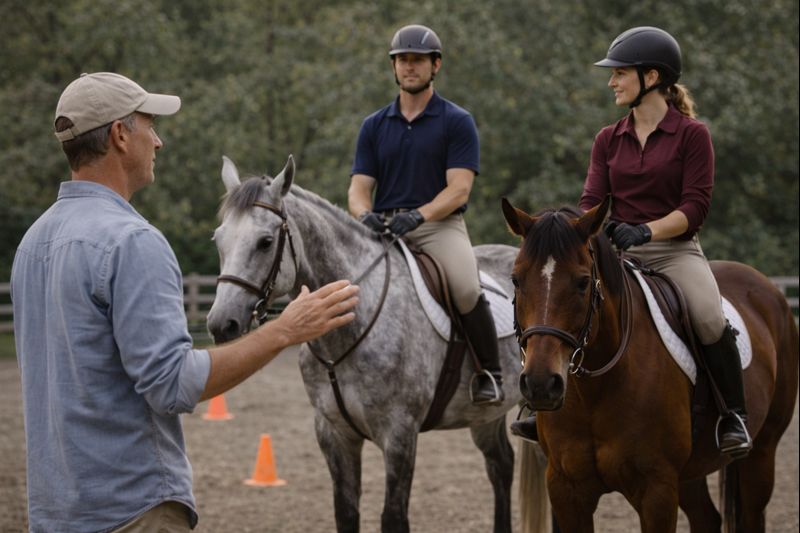
Clinics and workshops occupy a unique space in the equestrian world. They are not competitions, yet they carry a level of intensity and exposure that regular training often lacks. They are not casual lessons, yet they are usually more exploratory than formal programs. When approached thoughtfully, clinics and workshops become powerful tools for development—benefiting both horse and rider in ways that extend far beyond the event itself.
Their value lies not in instant transformation, but in perspective, feedback, and recalibration. Clinics do not replace daily training; they enrich it.
A Change of Environment Reveals the Real Picture
One of the most immediate benefits of clinics and workshops is environmental change. Working in a new arena, with unfamiliar horses nearby and a different atmosphere, reveals patterns that may stay hidden at home.
Horses may show:
- Increased tension or distraction
- Improved focus due to novelty
- Different reactions to aids
- Changes in energy or balance
Riders may notice:
- Altered posture under observation
- Different emotional responses to pressure
- Habits that only appear in public settings
This exposure provides valuable information. Clinics act as diagnostic environments, highlighting what truly holds up when conditions change.
Fresh Eyes Catch What Familiar Eyes Miss
Even the best trainer can become accustomed to a rider’s patterns over time. Clinics introduce fresh eyes—often with different backgrounds, priorities, and language.
Instructors at clinics frequently notice:
- Subtle position habits
- Timing issues that blend into routine lessons
- Compensations the rider no longer feels
- Strengths the rider underestimates
This external perspective often reframes familiar challenges. Riders hear explanations expressed differently, unlocking understanding that repetition alone could not achieve.
Learning Through Demonstration and Observation
Clinics and workshops offer something regular lessons often cannot: collective learning. Watching other riders work with the same instructor provides insight into both similarities and differences.
Riders learn by observing:
- How the instructor adapts to different horses
- Common patterns across multiple riders
- Multiple solutions to similar problems
- How horses respond to clarity versus force
Observation accelerates learning. Riders often recognize their own habits reflected in others, making feedback easier to accept and apply.
Horses Benefit From Varied Input
Clinics are not just educational for humans. Horses benefit from varied handling, exposure, and structured challenges when these are introduced thoughtfully.
Benefits for horses may include:
- Improved adaptability
- Increased confidence in new environments
- Exposure to different exercises or approaches
- Mental stimulation without monotony
For horses accustomed to a single routine, clinics broaden experience without requiring long-term disruption.
Clinics Encourage Intentional Riding
Because clinics are time-limited, riders tend to approach sessions with greater intention. Warm-ups are more focused. Goals are clearer. Riders are more attentive to feedback.
This intentionality often highlights how much time is wasted in unfocused riding at home. Clinics demonstrate the value of purposeful sessions—even short ones.
Many riders leave clinics not with new exercises, but with a clearer understanding of how to use their time effectively.
Workshops Build Skills Beyond Riding
Workshops often extend beyond mounted sessions. Topics may include:
- Biomechanics and rider position
- Horse behavior and learning theory
- Saddle fit or equipment assessment
- Conditioning and recovery strategies
- Mental skills and confidence building
These components deepen understanding and empower riders to make better decisions independently.
By addressing the “why” behind training, workshops create more thoughtful horsemen rather than more dependent students.
Structured Challenge Without Competitive Pressure
Clinics offer challenge without the pressure of competition. Riders work under observation, but without scores or rankings.
This environment encourages experimentation. Riders are more willing to try adjustments, make mistakes, and ask questions.
For horses, this reduces pressure while still offering exposure to structured demands. Learning occurs without the intensity of performance expectations.
Identifying Training Priorities
One of the most valuable outcomes of a clinic is clarity. Riders often leave with a clearer sense of what matters most.
Clinics help riders distinguish between:
- Foundational issues versus surface symptoms
- Long-term priorities versus short-term fixes
- Habits worth addressing immediately versus later
This clarity prevents scattered training and supports more focused progress at home.
Improving Communication Between Horse and Rider
Clinics frequently highlight communication gaps. Under guidance, riders learn how small changes in timing, balance, or intention alter the horse’s response.
Horses often show immediate improvement when communication becomes clearer—not because they learned something new, but because confusion was removed.
This reinforces an important principle: many “training problems” are communication problems in disguise.
Learning to Ride Under Observation
Riding while being watched is a skill in itself. Clinics help riders manage self-consciousness, nerves, and performance anxiety.
Repeated exposure builds comfort with being observed, corrected, and challenged publicly. This skill transfers directly to shows, lessons, and other high-pressure environments.
Learning to stay present under observation improves both riding quality and emotional resilience.
Clinics as Confidence Builders
Positive clinic experiences can significantly boost confidence. Riders often discover that challenges they feared are manageable when approached calmly and supported appropriately.
For horses, successful exposure builds confidence in handling new situations. Each positive experience expands the horse’s comfort zone.
Confidence gained in clinics often carries forward, improving performance and enjoyment long after the event ends.
When Clinics Are Used Poorly
Clinics are not inherently beneficial. Poorly structured clinics can overwhelm horses, exhaust riders, or prioritize spectacle over learning.
Warning signs include:
- Excessive repetition without rest
- Ignoring individual horse needs
- Pressure to perform beyond readiness
- One-size-fits-all approaches
Choosing clinics thoughtfully and advocating for horse welfare is essential.
Integrating Clinic Learning at Home
The real value of a clinic appears after it ends. Riders who gain the most are those who integrate learning gradually.
Effective integration involves:
- Writing down key takeaways
- Practicing one or two changes at a time
- Allowing the horse time to adapt
- Resisting the urge to overhaul everything
Clinics should refine training, not replace it.
A Tool for Long-Term Development
Clinics and workshops are not shortcuts. They are calibration tools—opportunities to realign, reflect, and refocus.
Used periodically, they support long-term development by preventing stagnation, reinforcing fundamentals, and expanding perspective.
Shared Learning Strengthens Community
Clinics bring people together. Shared learning experiences foster connection, discussion, and mutual support.
These connections often outlast the event, creating informal learning networks and friendships that enrich the equestrian journey.
Growth Happens Between the Sessions
The most important work happens between clinics, not during them. Clinics plant ideas. Time allows those ideas to mature.
When riders approach clinics with curiosity rather than expectation, the benefits extend far beyond a single weekend.
Clinics as Mirrors, Not Magic
Clinics do not create ability out of thin air. They reflect what is already present—strengths, weaknesses, patterns, and potential.
When used with humility and intention, clinics and workshops improve both horse and rider not by changing who they are, but by helping them understand themselves better.
That understanding is where meaningful progress begins.