
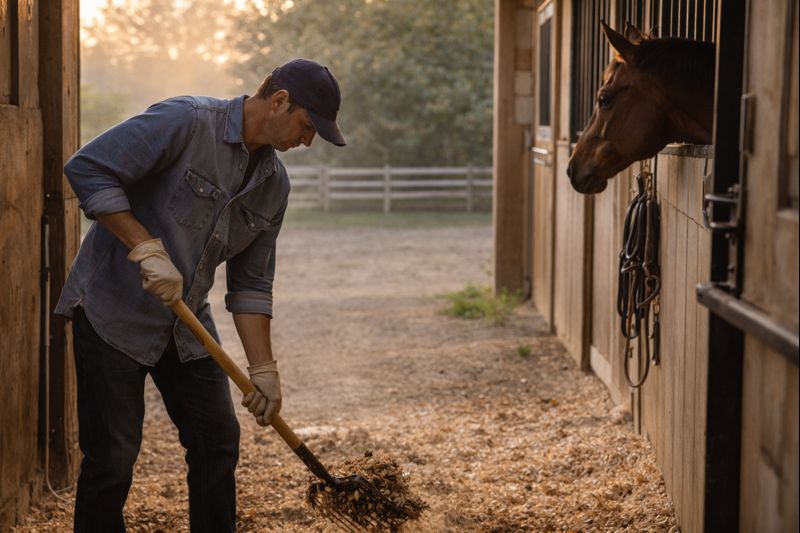
Daily routines around horses rarely look impressive from the outside. They are repetitive, physical, and often unnoticed by anyone except the person doing them and the horse receiving the care. Yet these routines carry a quiet power. Over time, they shape horses’ well-being, influence behavior, and profoundly affect the people who perform them.
In a world that often celebrates speed, disruption, and visible achievement, the stable operates on different rules. Progress comes from consistency rather than intensity. Trust grows from predictability rather than novelty. The power of daily routines lies not in what they promise, but in what they reliably deliver.
Why Horses Depend on Routine
Horses are prey animals whose nervous systems are designed to seek safety through predictability. In the wild, routines revolve around grazing, movement, and social interaction. Domestic horses rely on humans to recreate that sense of order.
Consistent routines provide:
- Predictable access to food and water
- Regular opportunities for movement
- Stable social contact
- Familiar patterns of handling
When these elements are reliable, horses relax. When routines are chaotic or constantly changing, stress increases—even if basic needs are technically met.
Routine as a Foundation for Emotional Stability
Horses do not understand calendars or future plans. They understand patterns. Feeding at similar times, being handled in familiar ways, and working within recognizable structures helps regulate their emotional state.
A horse that knows what comes next is less reactive. Anticipation replaces anxiety. This emotional stability supports better learning, safer handling, and more consistent performance.
Many behavioral issues attributed to temperament or training difficulty are, at their core, responses to inconsistent routines.
Small Actions With Cumulative Impact
Daily routines are built from small actions: checking water, picking hooves, grooming, tidying equipment, opening and closing gates. Individually, these tasks seem insignificant. Collectively, they shape the horse’s physical and mental health.
Regular grooming improves circulation and allows early detection of soreness or injury. Daily hoof care prevents minor issues from becoming major problems. Consistent turnout supports joint health and mental well-being.
The power of routine lies in accumulation. What is done quietly every day often matters more than what is done occasionally with great effort.
Routines Create Clear Expectations
Horses learn expectations through repetition. When handling routines are consistent, horses understand how to behave. Leading becomes calmer. Grooming becomes easier. Veterinary and farrier visits become less stressful.
Clear routines reduce the need for correction. Instead of constantly managing behavior, handlers rely on predictability to guide it.
This clarity benefits both horse and human, reducing tension and improving safety.
The Human Side of Stable Routines
Daily routines affect humans as much as horses. The stable offers structure that contrasts sharply with modern life, which often lacks physical rhythm and clear boundaries.
Barn routines require:
- Presence rather than multitasking
- Physical engagement rather than abstraction
- Responsibility without external validation
This combination creates a grounding effect. Tasks must be completed, but they are tangible and finite. There is satisfaction in completion without performance pressure.
Routine as a Tool for Mental Regulation
Many people experience the stable as calming, even on difficult days. This is not accidental. Repetitive physical tasks help regulate the human nervous system.
Actions like grooming, mucking stalls, and sweeping aisles involve rhythmic movement. Rhythm supports emotional regulation by reducing cognitive overload and promoting focus on the present moment.
Routine becomes a form of active meditation—one that does not require intention or explanation.
Predictability Builds Trust
Trust between horse and human is built through predictability. When care routines are reliable, horses learn that humans are consistent and safe.
This trust transfers into training. Horses handled calmly and predictably are more willing to try, more tolerant of mistakes, and less defensive when confused.
Trust is not built through dramatic gestures, but through thousands of ordinary interactions that confirm reliability.
When Routines Become Rigid
While routine is powerful, rigidity can become a problem. Horses still need adaptability, and humans need to respond to changing circumstances.
Healthy routines allow for flexibility within structure. Feeding times may vary slightly. Training intensity changes based on the horse’s condition. Weather alters daily plans.
The goal is predictability without inflexibility—structure that supports well-being rather than control.
Daily Routines as Early Warning Systems
Consistent routines make change visible. When the same tasks are done every day, small deviations stand out.
A horse that doesn’t finish feed, resists grooming, or moves differently during turnout sends early signals. Without routine, these changes are easier to miss.
Daily care becomes a form of ongoing assessment, allowing issues to be addressed before they escalate.
The Relationship Between Routine and Safety
Many stable accidents occur during rushed or inconsistent handling. Clear routines reduce uncertainty, which reduces risk.
Horses that know what to expect during feeding, leading, and grooming are less likely to react unpredictably. Humans who follow routine are less likely to overlook details that compromise safety.
Routine creates a shared language that both horse and human understand.
Routine as an Expression of Care
Daily routines communicate care more clearly than occasional intensity. Horses do not measure affection in dramatic gestures. They experience it through consistency.
Being fed on time, handled gently, and moved regularly communicates reliability. This reliability forms the basis of welfare.
Routine is not boring to horses. It is reassuring.
What Routines Teach Humans About Progress
The stable teaches a lesson that extends beyond horsemanship: progress is often quiet. Growth rarely announces itself loudly.
People accustomed to immediate results may struggle at first with the slow pace of routine-based improvement. Over time, they learn to value consistency over urgency.
This lesson transfers into other areas of life, encouraging sustainable effort rather than burnout-driven cycles.
Carrying Routine Beyond the Barn
Many people find that stable routines influence how they structure their lives outside the barn. They become more consistent, more patient, and more attentive to small details.
Routine becomes less associated with boredom and more associated with stability.
The Quiet Power That Endures
The power of daily routines around horses is not dramatic. It does not seek attention. It works quietly, steadily, and reliably.
Through routine, horses feel safe, humans feel grounded, and relationships deepen. Training improves not because of extraordinary effort, but because the foundation is solid.
In the end, daily routines are not just tasks to be completed. They are the invisible framework that supports everything else—soundness, trust, learning, and connection—one ordinary day at a time.