
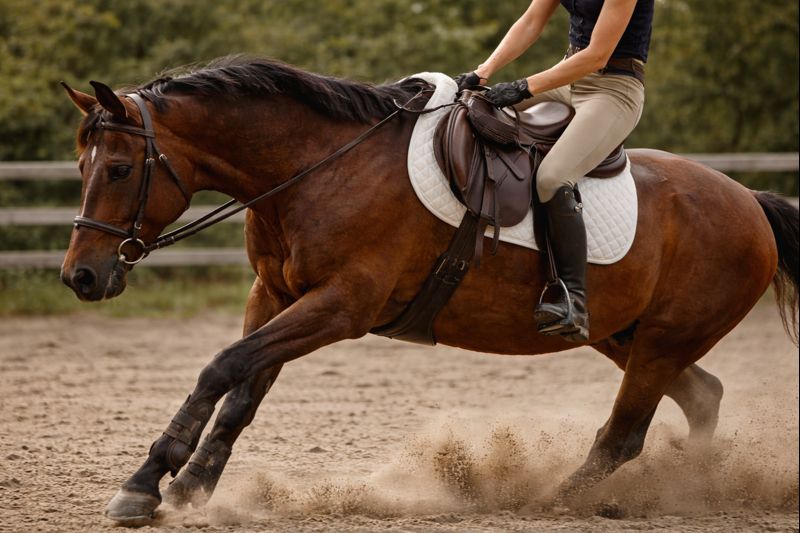
Movement is the most honest expression of how a horse feels in its body. Long before lameness becomes obvious, before resistance turns into refusal, subtle changes in movement often reveal discomfort. One of the most common—and most overlooked—causes of these changes is poor equipment fit.
Saddles, bridles, girths, bits, pads, and boots all interact directly with sensitive structures. When equipment interferes with comfort or biomechanics, the horse adapts its movement to protect itself. These adaptations may keep the horse functioning in the short term, but they come at a cost to soundness, performance, and long-term welfare.
Movement Is the First Place Discomfort Appears
Horses rarely express discomfort through obvious pain behaviors at first. Instead, they adjust how they move. A stride shortens slightly. A shoulder stops reaching forward as freely. The back loses elasticity. Transitions become tense or delayed.
Because these changes often develop gradually, riders may attribute them to training plateaus, behavioral issues, or lack of fitness. In reality, the horse may be compensating for pressure, restriction, or irritation caused by ill-fitting equipment.
How Equipment Influences Biomechanics
Every piece of equipment affects how force travels through the horse’s body. When fit is correct, pressure is distributed evenly and movement remains fluid. When fit is incorrect, pressure concentrates in specific areas, forcing the horse to alter posture and stride to reduce discomfort.
Biomechanical changes caused by poor fit often include:
- Reduced range of motion in the shoulders
- Hollowing or bracing of the back
- Shortened or uneven stride length
- Increased tension through the neck and poll
- Altered rhythm or tempo
- Asymmetrical movement patterns
These changes are not choices. They are protective strategies.
Saddle Fit and Its Impact on Movement
The saddle is the most influential piece of equipment affecting movement. A poorly fitting saddle can restrict the horse’s ability to lift its back, rotate the shoulders, and engage the hindquarters.
Common saddle-related movement issues include:
- Difficulty stretching forward and down
- Reluctance to bend evenly on circles
- Rushing or resisting transitions
- Loss of impulsion despite adequate fitness
- Inconsistent canter leads or cross-cantering
- Stiffness that worsens as the ride progresses
A saddle that pinches at the withers or sits too close to the shoulder blade restricts scapular rotation. The horse may shorten the front stride to avoid pressure. Over time, this can lead to uneven muscle development and increased strain on joints and soft tissues.
Back Restriction and Chain Reactions
The horse’s back is designed to move dynamically. When equipment prevents the back from lifting and swinging, the entire movement chain is affected.
A restricted back often leads to:
- Reduced engagement of the hindquarters
- Increased load on the forehand
- Compensatory tension in the neck
- Altered balance during turns and transitions
These compensations may allow the horse to continue working, but they increase the risk of secondary issues such as hock strain, sacroiliac discomfort, and front limb overload.
Bridle and Bit Fit: Small Details, Big Consequences
While saddles receive most of the attention, bridle and bit fit also play a major role in movement quality. The head and neck are integral to balance. Discomfort in the mouth or poll alters how the horse carries itself.
Poor bridle or bit fit can lead to:
- Tension through the poll and neck
- Bracing against the contact
- Hollowing of the back
- Loss of rhythm and elasticity
- Difficulty with lateral work and turning
A horse that avoids contact is often protecting sensitive structures. When the mouth is uncomfortable, the horse may lift the head, brace the jaw, or disengage the back—all of which directly affect movement.
Girths, Pads, and Hidden Pressure Points
Even when the saddle fits well, secondary equipment can undermine movement. Girths that pinch behind the elbow, pads that create uneven pressure, or boots that restrict joints all influence how freely the horse moves.
Girth discomfort often presents as:
- Short, tense steps at the start of work
- Resistance to moving forward
- Difficulty taking a deep breath
- Hollow posture early in the ride
Similarly, ill-fitting boots can restrict tendon glide or joint flexion, subtly altering stride length and timing. These effects may be small individually but significant when repeated over time.
Compensation Patterns and Long-Term Effects
Horses are remarkably adaptable. They can compensate for discomfort for months or even years. However, compensation always shifts load somewhere else in the body.
Common long-term consequences of poor equipment fit include:
- Uneven muscle development
- Chronic stiffness on one rein
- Recurrent “mystery” lameness
- Increased wear on joints and soft tissues
- Declining performance despite consistent training
By the time overt lameness appears, the original source of discomfort may no longer be obvious. What began as equipment-related pressure can evolve into a secondary injury elsewhere.
Why Training Alone Cannot Fix Fit Problems
Riders often attempt to correct movement issues through training: more transitions, more strengthening exercises, more repetition. While correct training is essential, it cannot override physical discomfort.
A horse cannot learn to move correctly while avoiding pain. Increased training pressure often worsens the problem, reinforcing compensatory patterns instead of resolving them.
Recognizing when a movement issue is physical rather than educational is a critical skill in horsemanship.
Movement Changes to Watch For
Early detection depends on observation. Signs that equipment fit may be affecting movement include:
- A change in stride length without a clear cause
- Increased stiffness at the beginning of work
- One-sided resistance that persists despite training
- Improved movement when ridden bareback or in different equipment
- Declining quality of movement as the session progresses
- Behavioral changes associated with saddling or bridling
These patterns deserve investigation, not dismissal.
Fit Is Dynamic, Not Static
One of the most important principles in equipment fit is that horses change. Muscle development, weight fluctuations, aging, seasonal coat changes, and training intensity all alter how equipment sits.
A saddle or bridle that fit well six months ago may no longer be appropriate. Regular reassessment is essential, especially during periods of physical change or increased workload.
The Role of Professionals—and the Rider’s Responsibility
Saddle fitters, veterinarians, bodyworkers, and trainers all play a role in supporting sound movement. However, the rider is the constant presence in the horse’s life. Developing an educated eye for movement and comfort is part of responsible ownership and riding.
Professional input is most effective when paired with careful daily observation.
Comfort as the Foundation of Correct Movement
Correct movement is not something the horse must be forced into. It emerges naturally when the body is comfortable and free to function as designed. Equipment that fits well supports this process by removing unnecessary barriers.
When equipment fits correctly:
- The back lifts more easily
- The stride becomes longer and more elastic
- Transitions smooth out
- Balance improves
- The horse moves with confidence rather than caution
A Welfare-Centered Perspective
Ultimately, the way a horse moves reflects how it feels. Poor equipment fit does not just limit performance—it compromises welfare. Addressing fit is not about perfection or luxury; it is about fairness.
When we ask a horse to carry us, we accept responsibility for how our equipment affects its body. Paying attention to movement is one of the clearest ways a horse communicates whether that responsibility is being met.
Improving equipment fit often results in immediate, visible changes in movement—not because the horse learned something new, but because it was finally allowed to move without discomfort.