
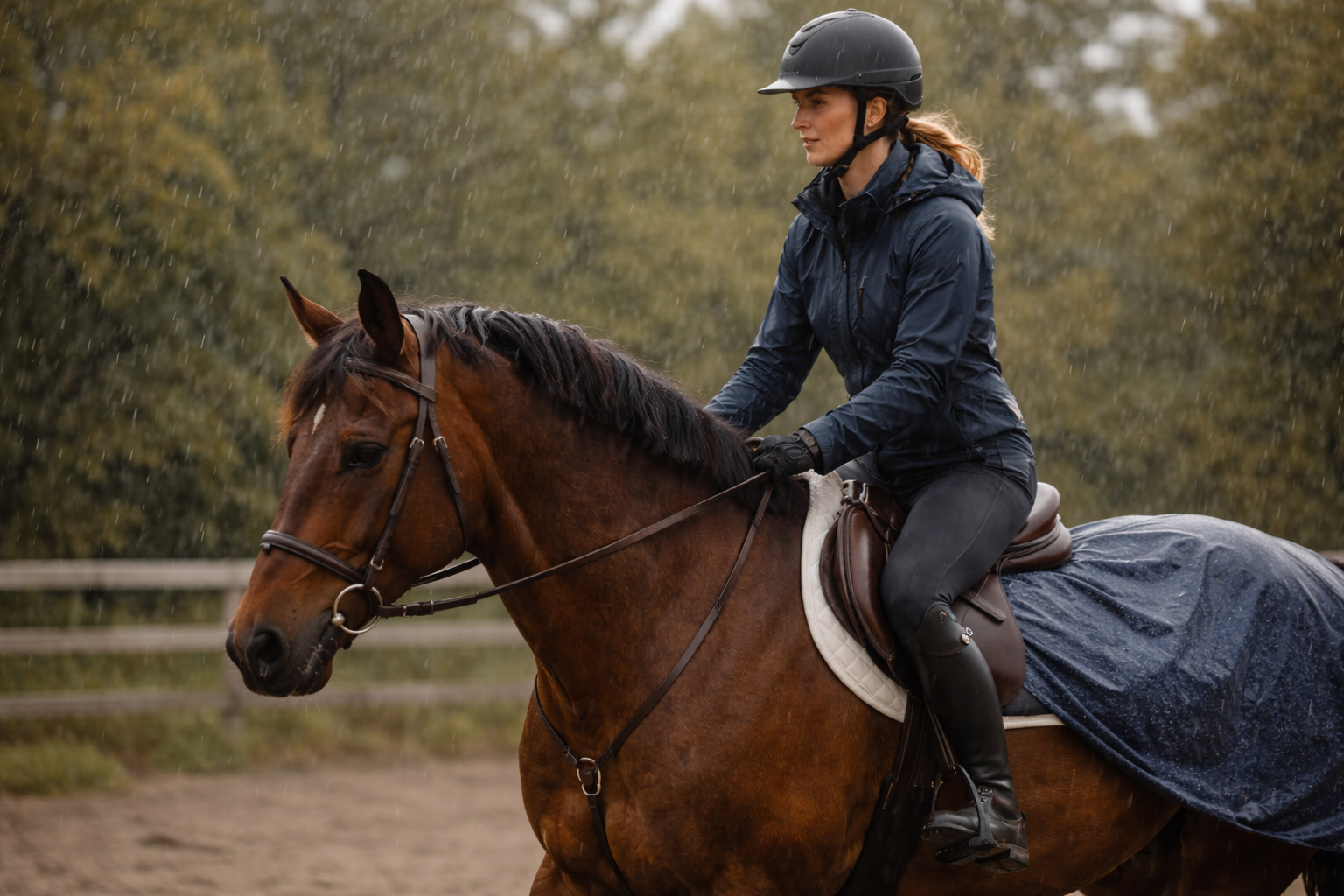
Riding does not happen in a controlled environment. Unlike indoor sports, equestrian activities are shaped by weather, terrain, and seasonal change. Rain, wind, cold, heat, and humidity all influence how a rider moves and how a horse responds. For this reason, all-weather riding gear is not about convenience or style—it is about safety, consistency, and quality of communication.
When a rider is physically uncomfortable, the body compensates. Muscles tighten, balance shifts, reactions slow down. Horses feel these changes immediately. Choosing the right riding gear for different conditions is one of the most practical ways to protect both rider effectiveness and horse welfare.
Why Rider Comfort Directly Affects the Horse
Horses respond to the rider’s body before they respond to aids. Cold stiffens joints and reduces elasticity. Heat accelerates fatigue and reduces coordination. Wind and rain increase sensory overload and tension. When the rider struggles to stay balanced and relaxed, the horse often mirrors that instability.
All-weather gear allows the rider to remain physically neutral despite external conditions. This neutrality supports clearer aids, steadier hands, and a more reliable seat—elements that make the horse feel safer and more confident.
Layering as a Performance Strategy
Layering is the foundation of effective all-weather riding. A single heavy garment often restricts movement, while layers allow adjustment as body temperature changes during warm-up and cool-down.
A functional layering system includes:
- Base layer: moisture-wicking and close to the skin to manage sweat
- Insulating layer: warmth without bulk, preserving mobility
- Outer layer: protection from wind and rain without stiffness
Riding-specific outer layers differ from casual outdoor clothing. They are cut to accommodate a seated position, reduce excess fabric around the hips, and allow full shoulder movement. Jackets that work well for walking often fail in the saddle.
Riding in the Rain: Stability and Sensory Control
Rain introduces two major challenges: loss of grip and increased sensory input. Slick reins, damp tack, and noisy fabrics can all disrupt communication.
Effective rain gear should:
- Be waterproof without being rigid or loud
- Allow quiet movement of the arms and shoulders
- Stay secure in the saddle without riding up
- Maintain rein feel through appropriate gloves
Overly stiff rain jackets can restrict elbow movement and create tension in the contact. Materials that crinkle or flap may unsettle sensitive horses. The best rain gear becomes almost invisible in use, allowing the rider to focus on balance rather than protection.
Cold Weather: Warmth Without Rigidity
Cold weather riding requires a careful balance. Warmth is essential, but excessive bulk interferes with the seat and leg aids.
The areas most vulnerable to cold are:
- Hands (affecting rein feel)
- Core (affecting posture and breathing)
- Feet (affecting balance and stirrup security)
Effective cold-weather gear prioritizes core insulation while keeping hips and shoulders free. Thin, high-quality insulating layers outperform heavy garments. Gloves should preserve dexterity, not simply trap heat. Socks should warm without crowding the boot, as compressed feet lose circulation more quickly.
Cold hands are a safety issue, not just a comfort issue. Reduced sensation compromises timing and can lead to overuse of rein pressure.
Hot Weather: Managing Heat Without Losing Precision
Heat places a different kind of demand on the rider. Dehydration, fatigue, and reduced concentration increase risk and reduce quality of riding.
Hot-weather riding gear should:
- Promote airflow and evaporation
- Protect from UV exposure
- Maintain grip even with sweat
- Dry quickly between rides
Lightweight fabrics with strategic ventilation panels help regulate body temperature without sacrificing structure. Helmets with proper airflow significantly reduce heat stress. Gloves designed for warm weather prevent reins from slipping while avoiding overheating of the hands.
Heat management is not optional. A fatigued rider is slower to react, less balanced, and more prone to mistakes—conditions that directly affect the horse.
Wind: The Invisible Disruptor
Wind is often underestimated. Sudden gusts alter balance, amplify noise, and increase sensory input for horses.
Wind-appropriate gear should:
- Fit close to the body
- Minimize loose fabric
- Reduce flapping and sound
- Maintain warmth without stiffness
Windproof layers are especially valuable in open arenas, trails, or elevated terrain. Riders should avoid garments that billow or snap in strong air, as these can distract or startle the horse.
Footwear and Traction in Variable Conditions
All-weather comfort extends beyond clothing. Footwear affects safety both on and off the horse. Wet concrete, mud, ice, and uneven ground increase injury risk in barns and paddocks.
Riding boots for variable conditions should:
- Provide reliable traction when walking
- Maintain a defined heel for stirrup safety
- Resist water without becoming slippery
- Offer sufficient ankle support
Boot care also matters. Wet or worn soles compromise grip. Regular inspection and maintenance are part of responsible all-weather riding.
Visibility in Low-Light Conditions
Short winter days, fog, and rain reduce visibility. Riders who hack out or ride near shared spaces must account for this.
Visibility gear may include:
- Reflective bands or vests
- High-visibility saddle pads
- Helmet-mounted lights where appropriate
Visibility is not a substitute for awareness, but it reduces risk when conditions are unpredictable.
Comfort as a Consistency Tool
One of the greatest benefits of all-weather gear is consistency. Riders who are prepared for conditions ride more regularly and with less mental resistance. This consistency benefits horses, who thrive on predictable routines and familiar patterns of work.
A rider who cancels rides frequently due to discomfort may unintentionally create gaps in training, fitness, or mental engagement. Appropriate gear removes weather as a limiting factor, allowing training decisions to be based on the horse’s needs rather than the rider’s tolerance.
Matching Gear to Discipline and Environment
No single gear setup suits every rider. Discipline, climate, barn infrastructure, and horse sensitivity all matter. What works for a trail rider in a humid climate may not suit a dressage rider in a cold, windy region.
The guiding principle is function over fashion. Gear should serve the riding environment, not the other way around.
A Long-Term Investment in Safety and Communication
All-weather riding gear is often treated as optional or secondary. In reality, it is part of the communication system between horse and rider. When the rider’s body is supported, the aids become quieter and more reliable. When the rider remains calm and balanced despite conditions, the horse feels that stability.
Good gear does not make someone a better rider overnight. But it removes obstacles—discomfort, distraction, fatigue—that interfere with good riding. Over time, those small improvements compound into safer rides, clearer communication, and a stronger partnership.
Riding happens in the real world, not in perfect conditions. Choosing gear that respects that reality is one of the most practical decisions a rider can make—for themselves and for their horse.