
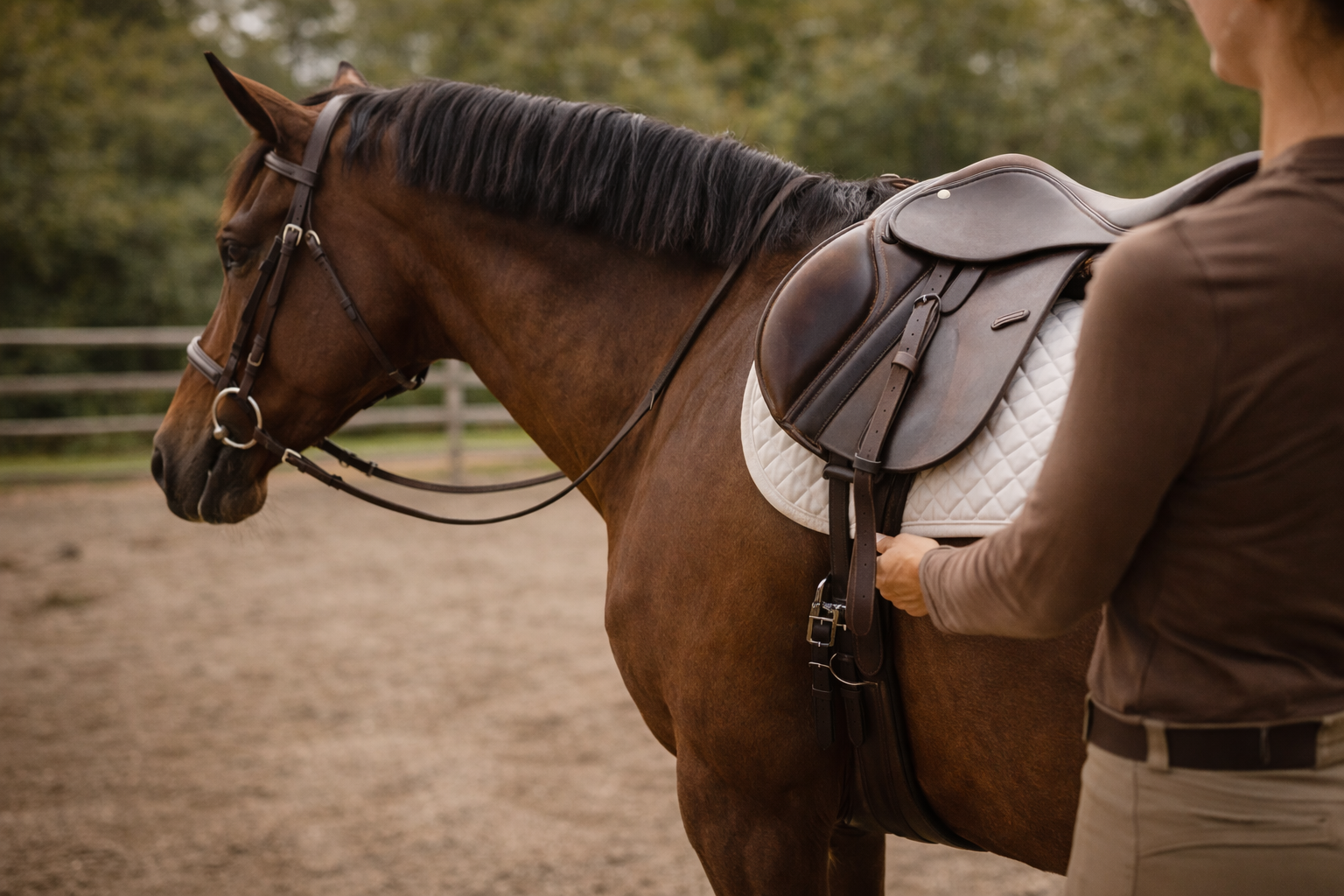
When a horse’s performance changes, riders often look first at training, fitness, or attitude. Tack fit should be just as high on the list. Equipment sits on sensitive areas—back, shoulders, mouth, poll—and even small fit problems can change movement, balance, and behavior. Because horses can’t explain discomfort in words, tack fit becomes part detective work and part responsibility.
Tack Fit Is Performance Support, Not a Cosmetic Detail
In an ideal scenario, tack disappears. The horse moves freely, the rider communicates softly, and the contact feels consistent. When tack fit is off, the horse often compensates. Compensation shows up as restriction, tension, or resistance—sometimes subtle, sometimes dramatic.
A key mindset shift is to treat tack fit as an ongoing relationship with the horse’s body, not as a one-time purchase decision.
Saddle Fit: The Most Common Source of Hidden Restriction
Saddle discomfort can make a talented horse look “average” and a willing horse look “difficult.” Signs can include:
– Shortened stride, especially in front
– Difficulty bending evenly
– Reluctance to lift through the back
– Rushing in transitions
– Hollowing or bracing under the rider
– Changes in canter leads or cross-cantering
– Uneven sweat patterns or soreness after riding
If a horse becomes resistant to being saddled or girthy, that’s not a training problem—it’s information that deserves investigation.
Girth and Billet Position: Pressure Where You Don’t Expect It
Even if the saddle fits, girth choice and billet placement matter. Some horses are sensitive behind the elbow, others react to pressure on the sternum. A girth that rubs or creates pressure points can cause “fussy” behavior that riders mistake for disobedience.
Clues of girth discomfort include:
– Biting during tightening
– Swishing tail when asked to move forward
– Short, tense steps at the start of a ride
– Hollow back and tight topline
– Reluctance to breathe deeply or stretch
A comfortable girth supports relaxation and better movement from the first minutes of work.
Bridle and Bit Fit: Comfort Shapes Contact
Contact is communication. If the bridle or bit creates pressure or pinching, the horse may avoid the connection entirely—or become heavy and resistant.
Signs of bridle or bit discomfort can include:
– Head tossing, opening mouth, crossing jaw
– Tongue issues (over the bit, out of the mouth)
– Inconsistent acceptance of the rein
– Difficulty flexing or turning
– Tension through the poll and neck
– Sudden spookiness or loss of focus
Fit details matter: cheekpiece length, browband width, noseband placement, and bit width and thickness. A horse with a small mouth may struggle with a bit that is simply too bulky.
The Mouth Is Not Separate From the Body
When the horse avoids bit pressure, the whole body changes. A horse that braces in the jaw often braces in the back. That can alter rhythm, stride length, and even lead changes. Riders may try to “fix” these issues with more training pressure, when the real fix is making the mouth comfortable enough to accept the conversation.
Protective Boots, Pads, and Extras: Helpful or Harmful?
Boots and pads can protect, but they can also create heat, rubbing, or restricted movement if they don’t fit correctly. Performance horses often show subtle changes when boots are uncomfortable:
– Reduced freedom through the shoulder
– Unwillingness to step under behind
– Changes in jump technique
– Overreacting to leg aids
Fit should be secure without tightness, and materials should match the work and climate.
The Horse’s Body Changes—So Tack Must Change Too
One of the most overlooked truths in tack fit is that horses are not static. Muscles develop, posture changes, weight shifts with seasons, and training alters topline shape. A saddle that fit six months ago may now sit differently. A bridle that looked fine may now rub as the horse’s neck changes.
Regular reassessment prevents chronic issues that slowly degrade performance.
Performance Clues That Point to Tack, Not Training
If you notice:
– A sudden change after tack adjustments
– A problem that appears only in certain gaits
– Resistance that increases as work intensifies
– Improvement when riding bareback or in a different saddle
– Issues that appear in one direction more than the other
…tack fit is a reasonable suspect.
A Five-Minute Post-Ride Review
After your next ride, take five minutes to look for evidence. Run your hand along the horse’s back for heat or sensitivity. Check for ruffled hair, dry spots, or uneven sweat. Note whether the girth area is irritated. Look at the corners of the mouth for rubs. None of these signs alone is a diagnosis, but together they paint a picture.
If you keep a simple log—what you rode in, what you did, and what you observed—you’ll spot patterns quickly. Performance issues that feel random often become obvious when you collect a few weeks of data.
A Welfare-First Approach to Better Performance
The most ethical way to pursue performance is to remove barriers to comfort. When tack fits well, horses often become more expressive, more willing, and easier to train. The rider feels less need to “make it happen,” because the horse can move freely and understand the aids without pain.
Tack fit doesn’t replace good training, but it sets the stage for it. If your horse is telling you something has changed, listen first through the lens of comfort. You may find the path back to better performance is not more pressure—but better fit.
Fit Changes Faster Than You Think
It’s normal for a horse to change shape in a month of consistent work, especially if the program includes correct stretching and strength building. That’s good news—until your tack doesn’t keep up. If you are developing your horse’s topline, schedule tack checks more often than you think you need. Good performance depends on comfort, and comfort depends on fit staying current.