
Routine is one of the most underrated tools in horse care. It doesn’t look glamorous. It isn’t new tack, a fresh training method, or a flashy competition goal. But for horses, routine is often the difference between a stable, healthy life and an environment that quietly creates stress, digestive issues, and behavioral problems. Horses are animals that thrive on predictability—not because they lack curiosity, but because their biology was built for consistent patterns.
To understand why routine matters so much, start with the horse’s natural design. Horses evolved to graze for many hours a day, moving gradually while eating small amounts of forage almost continuously. Their digestive system reflects that lifestyle. The stomach produces acid constantly, and the gut is designed to process fiber steadily. When feeding schedules are irregular or forage access is limited, the digestive system can become irritated. This contributes to issues like ulcers, colic risk, and unstable energy levels. A consistent feeding routine, with frequent forage intake, supports both digestive comfort and overall health.
Routine also supports the horse’s nervous system. Because horses are prey animals, they depend on predicting the environment to stay safe. In the wild, unpredictable change often signals danger: a new smell, a sudden movement, a strange sound. When a domestic horse experiences constant unpredictability—random turnout times, inconsistent handling, irregular exercise—it can create a low-grade stress response. Stress may not always look dramatic. Sometimes it shows up as subtle tension, irritability, difficulty focusing, or chronic “busy” behavior like pawing, weaving, or fence walking. A stable routine reduces that background stress by helping the horse feel secure.
A well-designed routine includes more than feeding. It includes turnout, social interaction, grooming, training, rest, and environmental management. For many horses, predictable turnout is a major welfare factor. Horses are movement and social animals. Regular time outside, ideally with compatible companions, supports mental health and physical soundness. Inconsistent turnout can lead to pent-up energy, stiffness, and behavioral explosions under saddle—not because the horse is “naughty,” but because the horse’s needs weren’t met consistently.
Grooming routines matter too. Grooming is not just cleaning; it’s daily observation. When you groom a horse consistently, you learn what is normal: the feel of the coat, the temperature of the legs, the shape of the muscles, the horse’s typical expressions. That makes it easier to notice early changes—heat, swelling, soreness, skin irritation, weight shifts, or subtle discomfort. Routine creates a baseline, and baseline makes early detection possible. In horse care, early detection is often what prevents small issues from turning into expensive, serious problems.
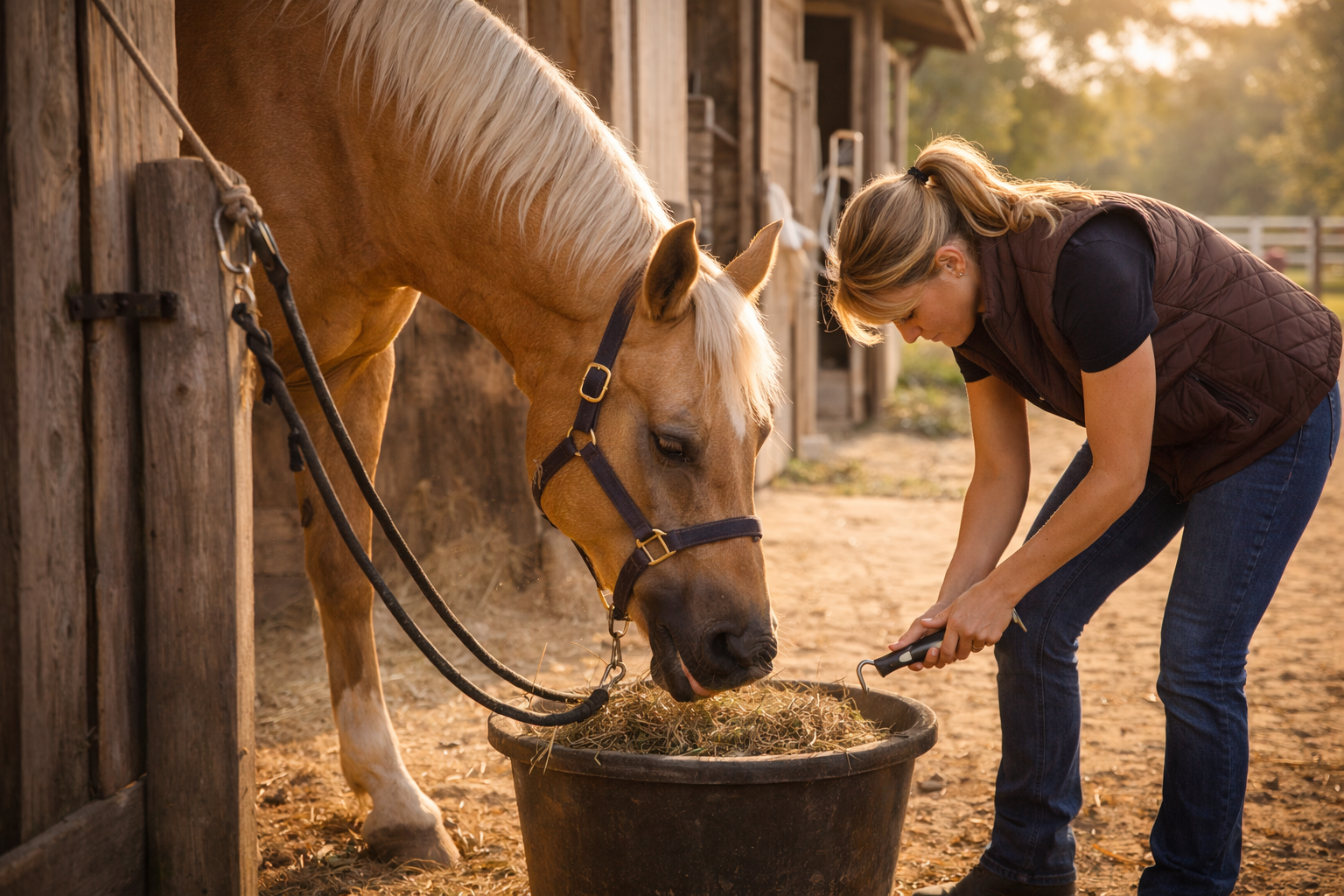
Hoof care is another area where routine is essential. Picking hooves daily reduces the risk of thrush, helps prevent stone bruises, and allows you to catch soreness early. Farrier schedules also benefit from routine. Regular trims and shoeing support balanced movement, reduce strain on joints and tendons, and help maintain long-term soundness. When hoof care becomes irregular, small imbalances can quietly accumulate until they show up as lameness or performance issues.
Training routines are equally important, but “routine” does not mean doing the exact same workout every day. Horses need variety to stay engaged and to develop balanced fitness. The routine should be the structure: warm-up patterns, consistent cues, clear expectations, and adequate recovery. Within that structure, you can add variety: poles, trail rides, transitions, lateral work, ground training. Horses feel safer when the “language” stays consistent even if the exercise changes. That consistency builds confidence and reduces anxiety.
One of the most important routines in horse care is rest. Many owners focus on training but underestimate recovery. Horses, like athletes, need rest days and easy days. Muscle repair, tendon adaptation, and mental freshness all depend on recovery time. Without it, horses can become sore, irritable, and resistant. A routine that includes planned recovery is not lazy—it’s intelligent and sustainable.
Routine also helps the human side of horse care. When schedules are consistent, management becomes more efficient and less stressful. Horses are easier to handle when they know what’s coming. Loading, farrier work, grooming, and vet visits often go better when a horse’s daily life is predictable. Predictability builds trust. Trust makes everything safer.
That said, horses do need flexibility training as well. A horse with perfect routine but no exposure to change may struggle at shows, clinics, or travel. The solution is not chaos; it’s gradual variation built on a stable base. Think of routine as the horse’s “home language.” Once the horse feels secure in that language, you can teach it to handle new situations without panic. For example, keep feeding times consistent but occasionally introduce a new obstacle in the arena. Keep turnout routine stable but practice short periods of standing quietly in different places. The horse learns that change can happen inside a safe structure.
Seasonal routine adjustments are also part of good care. As weather changes, routines should adapt: hydration management in summer, blanket decisions in winter, changes in forage quality, adjustments in turnout conditions. The key is consistency within the new season. Sudden shifts in feed or turnout can stress the gut and the mind. Slow transitions—over 7 to 14 days for feed changes, for example—support stability.
Finally, routine is a welfare statement. It communicates respect for the horse’s needs. A predictable, thoughtful care routine tells a horse: you are safe, you are seen, and your comfort matters. In return, many horses become calmer, healthier, and more willing partners.
Routine may look simple, but in horse care, simple done consistently is powerful. The strongest programs aren’t built on constant change. They’re built on steady habits that protect the horse’s body, mind, and trust—every day.
Additional note: A consistent journal can help you track patterns—write down your horse’s appetite, manure quality, energy during warm-up, and any behavior changes after feed or routine adjustments. Over a few weeks, these notes often reveal links you would otherwise miss, allowing you to make smarter, welfare-first decisions with your veterinarian, trainer, or nutritionist.
Additional note: A consistent journal can help you track patterns—write down your horse’s appetite, manure quality, energy during warm-up, and any behavior changes after feed or routine adjustments. Over a few weeks, these notes often reveal links you would otherwise miss, allowing you to make smarter, welfare-first decisions with your veterinarian, trainer, or nutritionist.