
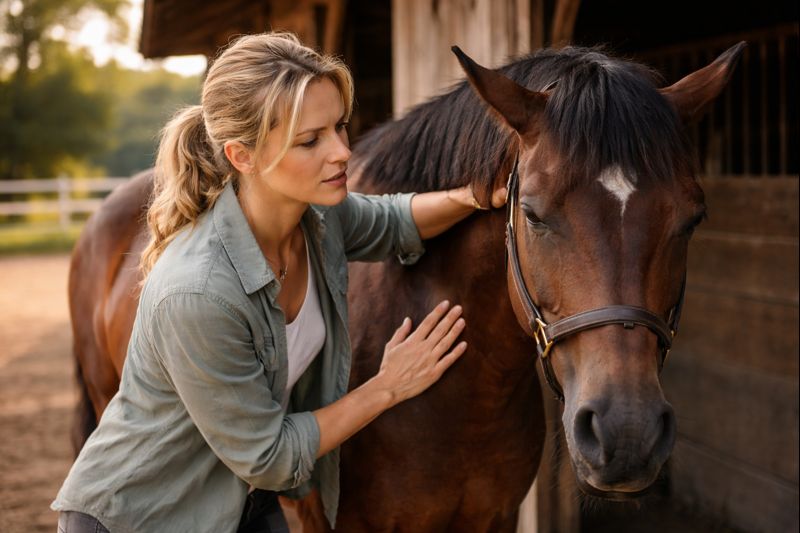
Horses are remarkably stoic animals. As prey species, they evolved to hide vulnerability, making discomfort and pain far less obvious than many owners expect. By the time a horse shows clear signs of distress, the issue has often been present for longer than it seems.
This is why learning to recognize the early, subtle signs of discomfort is one of the most important skills any horse owner or rider can develop. These signs are rarely dramatic. Instead, they appear quietly — in changes of behavior, movement, or attitude that are easy to overlook.
Paying attention early doesn’t just protect the horse’s health. It preserves trust, performance, and long-term soundness.
Discomfort Often Appears as “Behavioral Issues”
One of the most common mistakes in horsemanship is labeling discomfort as bad behavior. A horse that suddenly becomes resistant, dull, or reactive is often communicating something physical rather than emotional.
Small behavioral changes — reluctance to move forward, pinned ears during grooming, avoidance of the saddle, or a shorter temper — are frequently the first signs that something doesn’t feel right.
Horses don’t become difficult without reason. Behavior is communication, and discomfort is one of its most common causes.
Subtle Changes in Movement Matter
Early discomfort often shows up in motion long before obvious lameness appears. Riders may notice that the horse feels uneven, stiff on one rein, or less willing to bend or stretch.
These changes are easy to dismiss as training issues or “off days,” but consistency is key. If a movement that was previously easy now requires more effort, resistance, or correction, it deserves attention.
Discomfort doesn’t always produce a limp. Sometimes it simply changes how a horse moves through its body.
Changes in Willingness and Attitude
A horse experiencing discomfort may lose enthusiasm for work. Transitions feel heavier, responsiveness decreases, and motivation fades.
This lack of willingness is often misunderstood as laziness or lack of training. In reality, it may be the horse protecting itself from discomfort that increases with effort.
A willing horse rarely becomes unwilling without a reason. Attitude changes are often the emotional expression of physical issues.
Sensitivity During Grooming or Tacking Up
Grooming and tacking provide valuable insight into how a horse feels.
Flinching when brushed, tightening the back when the saddle is placed, swishing the tail during girthing, or stepping away unexpectedly are all potential signs of discomfort.
These reactions are especially meaningful when they represent a change from the horse’s normal behavior. Horses that once stood quietly and now show tension are telling a story worth listening to.
Changes in Posture and Body Language
Discomfort often affects how a horse carries itself at rest.
Watch for subtle posture changes such as:
- Standing with weight unevenly distributed
- Frequently shifting position
- Holding the head lower or higher than usual
- A consistently tense or hollowed back
These signs may appear long before movement issues become obvious, making them valuable early indicators.
Facial Expressions Tell a Story
Horses communicate a surprising amount through facial expression. Tension around the eyes, tight nostrils, clenched jaws, or a dull, withdrawn expression can all signal discomfort.
These changes are subtle and require familiarity with the horse’s normal expression. Owners who spend regular quiet time observing their horses are best equipped to notice these shifts.
Pain doesn’t always look dramatic — sometimes it looks quiet.
Performance Plateaus and Regression
When training progress stalls or performance declines unexpectedly, discomfort should always be considered.
A horse that suddenly struggles with movements it previously performed comfortably may not be confused — it may be compensating.
Pushing through these moments without investigation often worsens the issue, turning minor discomfort into chronic problems.
Changes in Behavior Outside of Work
Discomfort doesn’t disappear when the ride ends. Horses may show signs in their daily routines as well.
Look for changes such as:
- Altered eating habits
- Reduced interest in interaction
- Increased irritability with other horses
- Difficulty lying down or getting up
These behaviors often accompany physical discomfort and should not be ignored.
The Role of Saddle Fit and Equipment
Ill-fitting tack is one of the most common and overlooked causes of discomfort.
Even subtle pressure points can cause muscle soreness, restricted movement, and long-term damage. Horses may not react immediately but develop avoidance behaviors over time.
Regular assessment of saddle fit and equipment condition is essential, especially as a horse’s body changes with age, training, or season.
Why Early Intervention Matters
Addressing discomfort early prevents compensation patterns that strain other parts of the body.
Left unaddressed, minor issues can lead to:
- Chronic tension
- Secondary injuries
- Behavioral problems
- Loss of trust
Early attention often means simpler solutions and faster recovery.
Listening Without Ego
One of the greatest challenges for riders is separating personal expectations from the horse’s reality.
When discomfort appears, it’s tempting to push through, justify, or explain it away. Horses, however, don’t benefit from human timelines or goals.
Listening without ego — and without judgment — protects the partnership.
When to Seek Professional Help
While observation is crucial, it does not replace professional evaluation. Veterinarians, equine physiotherapists, bodyworkers, and saddle fitters all play important roles in identifying discomfort.
If signs persist, escalate, or worsen, professional input is essential.
Early evaluation is not overreacting — it’s responsible horsemanship.
Building a Habit of Observation
The most effective horse owners develop a habit of quiet observation. They notice small changes because they know what “normal” looks like for their horse.
This awareness becomes a powerful preventive tool, allowing issues to be addressed before they interfere with health or performance.
Final Thoughts
Horses rarely shout when something hurts. They whisper.
Those whispers appear as small changes — in movement, attitude, posture, or expression. Learning to recognize them is an act of respect and care.
By paying attention early, riders and owners protect not only the horse’s body, but the trust at the heart of the partnership.
A comfortable horse is not just easier to ride. It is more willing, more confident, and more capable of thriving — both in work and in life.