
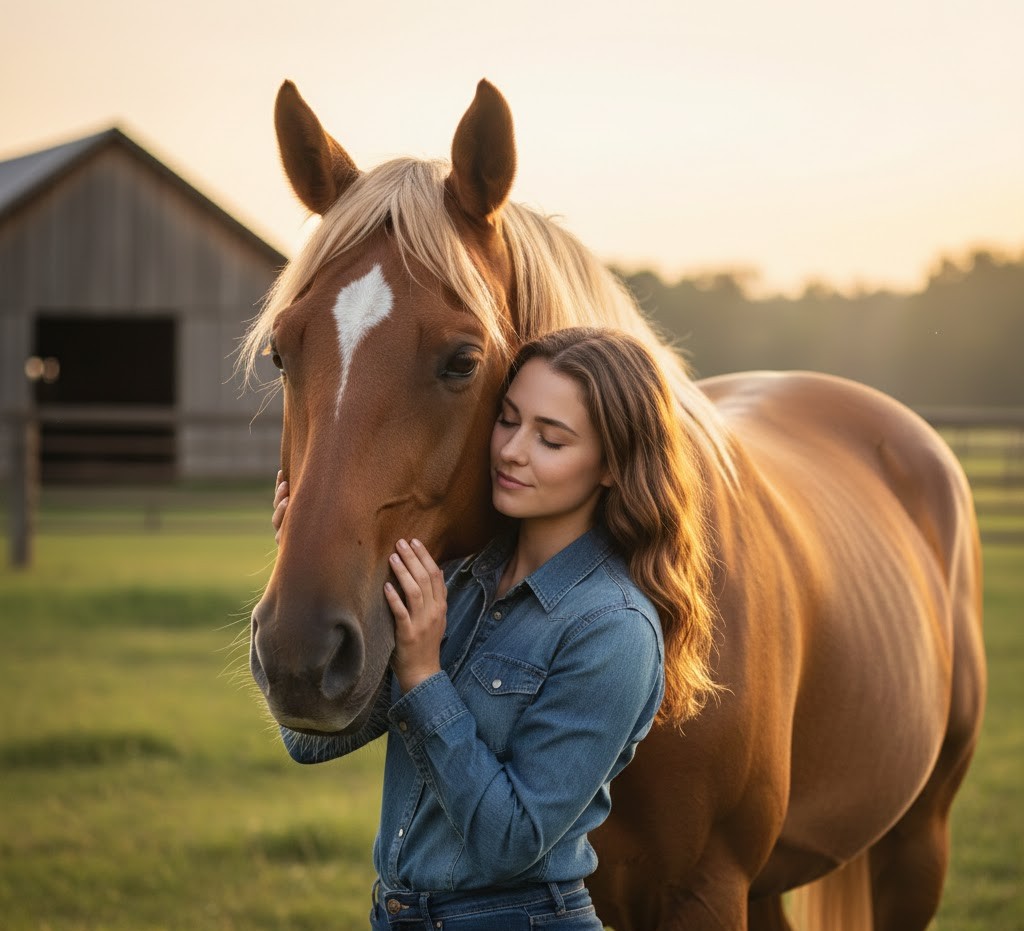
Anyone who has spent meaningful time with horses knows that the relationship goes far beyond technique, discipline, or sport. There is something quieter, deeper, and often difficult to put into words — an emotional connection that shapes how horse and rider move, learn, and trust each other.
This bond is not sentimental fantasy, nor is it automatic. It develops over time through consistency, communication, and emotional awareness. And when it’s present, it changes everything — from performance to well-being, from confidence to calm.
Understanding the emotional connection between horse and rider is essential not only for better riding, but for healthier, more respectful partnerships.
Why Horses Are Exceptionally Sensitive to Human Emotion
Horses evolved as prey animals, which means their survival depended on their ability to read subtle changes in their environment. Long before humans ever rode them, horses learned to detect tension, intention, and emotional shifts almost instantly.
When a human steps into a horse’s space, the horse doesn’t assess skill level or experience. It assesses emotional state. Breathing patterns, muscle tension, posture, and energy all communicate information before a single rein is picked up.
This sensitivity is the foundation of the emotional bond. Horses respond not just to physical cues, but to what the rider feels.
The Role of Trust in Emotional Connection
At the heart of the horse–rider relationship lies trust. Unlike machines or equipment, horses have a choice in how they respond. Trust determines whether they respond with relaxation or resistance, curiosity or caution.
Trust is built through predictability. When a rider is emotionally consistent — calm when things go wrong, patient during learning, clear rather than reactive — the horse begins to feel safe. Safety opens the door to connection.
A horse that trusts its rider is more willing to try, more forgiving of mistakes, and more open to communication.
How Emotional States Travel Between Horse and Rider
Emotions don’t stay contained within one body. Horses mirror human emotional states with surprising accuracy.
A tense rider often creates a tense horse. An anxious rider can unintentionally produce hesitation or spookiness. Conversely, a grounded, confident rider often settles a nervous horse without any obvious physical intervention.
This emotional feedback loop works both ways. Just as riders influence horses, horses influence riders. A calm horse can slow a racing mind. A steady rhythm can regulate breathing. Over time, this mutual regulation becomes part of the bond.
Why Connection Can’t Be Forced
One of the most misunderstood aspects of emotional connection is the belief that it can be demanded. It cannot.
Connection emerges when pressure decreases and awareness increases. Horses withdraw emotionally when they feel pushed, misunderstood, or emotionally overwhelmed by their rider.
This is why forcing obedience often weakens the bond. Compliance achieved through tension rarely leads to trust. Horses may perform, but the emotional distance grows.
True connection develops when the rider listens as much as they ask.
The Quiet Language of Feel and Timing
Much of the emotional bond between horse and rider lives in subtle moments — a half-second pause, a softening of contact, a breath taken at the right time.
Experienced riders often speak of “feel,” but this isn’t mystical. It’s emotional attunement combined with physical awareness. It’s knowing when to wait, when to ask, and when to release.
Horses respond deeply to this kind of communication because it respects their experience rather than overriding it.
Emotional Connection and Performance Are Linked
There is a misconception that emotional connection matters only for leisure riders, while performance riding depends purely on discipline. In reality, the opposite is often true.
Horses that feel emotionally secure with their riders tend to:
- Move more freely
- Respond more consistently
- Recover more quickly from mistakes
- Handle pressure better
At higher levels of riding, where precision and confidence matter most, emotional connection becomes a performance asset.
How Daily Interactions Shape the Bond
The emotional connection doesn’t begin when the rider mounts. It’s shaped in daily interactions — grooming, leading, feeding, and simply spending quiet time together.
Horses notice how humans approach them, whether movements are rushed or relaxed, whether touch is thoughtful or mechanical.
These moments teach horses whether humans are attentive partners or unpredictable sources of pressure.
Consistency in these small interactions builds emotional memory, which carries into riding.
When Emotional Disconnect Appears
Even strong partnerships experience moments of emotional disconnect. Changes in routine, physical discomfort, rider stress, or training pressure can all strain the bond.
Signs of emotional disconnection may include:
- Loss of responsiveness
- Increased tension
- Withdrawal or resistance
These signs are not defiance. They are communication.
Addressing emotional disconnect often requires stepping back rather than pushing forward — reassessing expectations, checking physical comfort, and restoring calm interaction.
Why Riders Benefit Emotionally from the Bond
The emotional connection is not one-sided. Riders often experience profound emotional benefits through their relationship with horses.
Time spent with horses can:
- Improve emotional awareness
- Reduce stress
- Build patience and empathy
- Encourage emotional regulation
For many riders, horses become emotional anchors — honest, responsive partners who offer feedback without judgment.
Emotional Honesty Over Perfection
Horses don’t require riders to be perfect. They require them to be emotionally honest.
A rider who acknowledges fear, frustration, or uncertainty — and manages it thoughtfully — is often more trustworthy than one who masks emotion behind force.
This emotional honesty strengthens the relationship and deepens mutual respect.
The Bond Evolves Over Time
The emotional connection between horse and rider is not static. It evolves with experience, challenges, and growth.
As riders mature emotionally and technically, horses respond in kind. The relationship deepens, communication becomes quieter, and trust expands.
This evolution is one of the most rewarding aspects of working with horses.
Final Thoughts
The emotional connection between horse and rider is real, measurable, and essential. It influences learning, performance, and well-being on both sides of the partnership.
Horses don’t connect to titles, achievements, or ambition. They connect to presence, clarity, and emotional steadiness.
When riders invest in that connection, they gain more than better rides. They gain a partnership built on trust, respect, and quiet understanding — one that speaks without words and lasts far beyond the arena.